The best wedding photo spots in Washington DC are the ones that fit your timeline, your light and your guests, not just the ones that photograph well. The city gives you marble monuments, tree-lined streets, waterfronts and quiet parks within a few miles of each other, and the hard part is choosing a short list you can actually reach. This guide covers the places, the seasons, the rules and the driving.
We start with the classic backdrops on the National Mall and around the Tidal Basin, then move out to Capitol Hill, Georgetown, the Wharf and Old Town Alexandria. You will find notes on permits and crowds, a look at seasonal light and foliage, ideas for rain and for after dark, and a route you can hand to a driver. The last section is about the vehicles, hours and run sheet that hold a photo plan together.
Key takeaways
- Pick two or three photo areas, not six, and build the route around light and traffic.
- Confirm permit rules with the National Park Service and each site before the day.
- Early morning and golden hour give the calmest frames at the monuments.
- A written run sheet and a named contact keep photos from eating the timeline.
- Rain and night plans are worth deciding in advance, not on the morning.
How to Choose Your Wedding Photo Spots in Washington DC
Start with the shape of your day rather than a list of landmarks. A couple marrying in Georgetown with a four-hour gap between the ceremony and reception has very different options from a couple getting ready in Arlington with ninety minutes and a hard call time at the venue. Write down the time you leave the getting-ready room, the time you must arrive at the reception, and the drive between them. What is left over is your real photo budget, and it is usually smaller than couples expect.
Light decides more than any other factor. Early morning on the Mall is soft and quiet, midday is harsh and crowded, and the hour before sunset turns the marble warm and the river gold. If your ceremony ends at two in the afternoon in July, plan for shade, interiors or a covered spot, and save the open monuments for later in the day. Photographers will work with whatever the schedule gives them, but choosing locations that suit the light you actually have makes the images stronger.
Distance is the quiet budget-killer. On a map, the Lincoln Memorial and the Capitol look close, but traffic, one-way streets, bridge crossings and parking turn a short hop into forty minutes. Pick a compact cluster, two or three spots within a few minutes of each other, and let the driver handle the rest. Fewer locations with more time in each one almost always produces better photographs than a rushed tour of six landmarks.
The Classic Backdrops: Monuments and the Tidal Basin
The Lincoln Memorial is the most photographed wedding backdrop in the city for good reason. The columns frame the Reflecting Pool and the Washington Monument, the steps give you height and separation, and the marble holds light well into the evening. It is also one of the busiest spots on the Mall, with tour groups arriving in waves through the morning and early afternoon. Early morning and late evening are calmer, and the undercroft and side terraces give you quieter angles when the steps are full.
The Washington Monument grounds offer open sky and long sight lines in every direction, which suits wide shots of a full wedding party. The grassy panels between the monument and the Capitol are generous enough for groups, and the paths around the base give you clean backgrounds without waiting in line. Midday sun here is unforgiving because there is little shade, so plan this stop for early or late in the day or bring an umbrella for cover.
The Jefferson Memorial and the Tidal Basin are the romantic end of the classic set. The memorial's colonnade and steps look across the water, and the basin paths give you cherry trees, the bridge to the memorial and long views back toward the Washington Monument. In spring the basin is the busiest place in the city, so a weekday morning is worth rearranging your schedule for. The cherry blossom photo guide covers timing and crowd workarounds in detail.
Permits and Rules Before You Bring a Photographer
Many of the places on this list are federal parkland, and the National Park Service manages them under its own rules. Some sites require a permit for wedding photography or ceremonies, some have limits on props, tripods, chairs and equipment, and some restrict where a group can stand. The rules vary by site and are updated from time to time, so treat anything you read online, including this post, as a starting point. Confirm the current requirements with the National Park Service before you lock your route.
Other properties set their own terms. The Capitol grounds, the Library of Congress, Union Station, the Wharf and the waterfront parks are each managed by a different authority, and each may have its own stance on professional photography, group size and commercial equipment. Churches and private venues usually have photography rules written into your contract, and some restrict flash, drones or standing in the aisle. Ask your photographer what they already know about each location, then verify it yourself with the property.
Build permit lead time into your planning rather than leaving it to the week before. Applications can take time to process, and a denied or delayed permit changes your whole route. Our guide to permits for wedding photos at DC monuments walks through the general categories, and your photographer or planner can help you decide which sites need paperwork. Keep a copy of any approval with your run sheet so the day-of contact has it on hand.
Photo Areas Compared
The table below groups the main photo areas by what they give you, the light that suits them and how they fit into a driving route. Use it to shortlist two or three areas that sit close together, then check each one against the permit notes above. Travel times are general and depend on the day, the time and events happening in the city.
A practical route usually pairs one monument area with one neighborhood or waterfront area, which gives you a mix of grand and intimate backdrops without crossing the whole city. Couples who want more variety can add a third stop, but keep the total driving under about half an hour between locations.
| Area | What it gives you | Best time of day | Travel notes |
|---|---|---|---|
| Lincoln Memorial and Reflecting Pool | Marble columns, long views to the Washington Monument, steps for group shots | Early morning or late evening | Busy midday; limited nearby parking, so a drop-off works well |
| Washington Monument grounds | Open sky, wide sight lines, room for a full wedding party | Early morning or golden hour | Little shade at midday; paths around the base are easy to walk |
| Jefferson Memorial and Tidal Basin | Water views, cherry trees, colonnade and steps | Sunrise in spring, evening year-round | Crowded during cherry blossom season; paths can be muddy after rain |
| Capitol Hill and Union Station | Civic architecture, stone facades, grand interior spaces | Morning or late afternoon | Security and event closures can affect access; confirm before you go |
| Georgetown streets and waterfront | Row houses, the C&O Canal towpath, river views | Morning for quiet streets, evening for the waterfront | Narrow streets and limited parking; walking shoes help |
| The Wharf and Navy Yard | Modern waterfront, boats, open sky over the Anacostia | Sunset and early evening | A short drive from the Mall; good for a final stop before the reception |
| Old Town Alexandria | Cobblestone streets, historic houses, the Potomac waterfront | Morning or golden hour | Across the river in Virginia; allow time for bridge traffic |
Capitol Hill, Union Station and the Library of Congress
The Capitol grounds give you neoclassical stone, formal landscaping and long views down the Mall, and the east front is often quieter than the west. The building itself is a working government site, so access, security and event closures change from day to day. Confirm what is open before you plan a stop here, and keep your group moving rather than setting up in one spot for long. The surrounding streets have handsome row houses and shade that make good backup options.
Union Station is a grand civic backdrop with a monumental facade, columns and a wide plaza in front. The exterior photographs well in morning and late afternoon light, and the scale suits a full wedding party. The station is also a working transit hub, so crowds, luggage and commuters are part of the scene. Shoot outside or in the public areas, keep your group out of the way of travelers, and check the station's photography rules before you arrive.
The Library of Congress sits next to the Capitol and offers one of the city's most ornate interiors, though access for photography is limited and typically requires arrangements made well in advance. Treat the exterior and the surrounding streets as your reliable options, and ask about interior access only if it matters to your plan. For couples who want a civic, architectural look, this cluster delivers it in a compact area.
Georgetown Streets, the Waterfront and the University
Georgetown's row houses, brick sidewalks and wrought-iron fences give you the neighborhood wedding look that the Mall cannot. The side streets off Wisconsin Avenue and M Street are full of color and texture, and the light falls softly between the buildings in the morning. Parking is tight and the streets are narrow, so a driver who can drop you at one corner and meet you at another saves a lot of walking in formal shoes. Our Georgetown wedding photo route by car maps a workable loop.
The C&O Canal towpath runs along the edge of Georgetown and gives you a green, quiet corridor a few steps from the busiest streets. The old stone walls, the water and the tree canopy make a calm contrast to the brick and traffic above. It is a popular running and cycling path, so expect company and keep your group to one side. After rain the towpath can be muddy, which matters if you are in a long gown or light-colored shoes.
The Georgetown waterfront along the Potomac opens up the sky and gives you river views, boats and the Key Bridge in the distance. It is a good late-afternoon stop before a reception in the neighborhood, and the walk between the waterfront and the university's older buildings is short. Georgetown University's campus has its own photography policies, so confirm access before you plan shots there. For couples getting ready nearby, see our Georgetown wedding limo service for how the day usually runs.
Old Town Alexandria and the Virginia Side
Old Town Alexandria is the strongest Virginia option for wedding photos, and it is a short drive across the river from the District. The streets around King Street are lined with brick sidewalks, historic row houses, shutters and gas lamps, and the waterfront at the foot of King Street opens onto the Potomac. You get cobblestones, painted doors and river views within a few blocks, which is a lot of variety for a short stop. Our guide to wedding photo spots in Old Town Alexandria maps the streets and the light through the day.
The Virginia side also gives you options beyond Old Town. George Washington's Mount Vernon estate sits south along the river with grounds and riverfront views, and it is a longer drive that needs its own slot in the schedule. Closer in, the parks and trails along the Potomac in Arlington look back at the DC skyline and work well at sunset. If your ceremony is in Virginia, staying on that side for photos saves you a river crossing and keeps the day calmer.
Parking and traffic are the practical limits in Old Town. The streets are narrow, some are one-way, and weekend afternoons bring visitors and brunch crowds. A chauffeur who knows the drop-off points can let you out near the waterfront and keep the vehicle moving rather than circling. Build in a little slack, especially on Saturdays, and keep the walking loop short so the couple is not standing in the heat or the cold between shots.
Season by Season: Cherry Blossoms, Summer, Fall and Winter
Cherry blossom season is the most requested and the most crowded time for photos on the Tidal Basin. The blooms usually arrive in late March or early April and last a short window, and the basin paths fill early in the day. If blossoms are part of your plan, go at first light, keep the loop short and expect road closures and detours near the basin. Our post on cherry blossom wedding photos covers timing and how to move around the crowds.
Summer gives you long evenings, warm light and the fullest calendar of outdoor ceremonies. The trade-off is heat and humidity, which show on faces and make a long walk in a gown or suit uncomfortable. Plan photos for the early morning or the last two hours before sunset, keep water in the car and build in shade breaks. Afternoon thunderstorms are common, so a summer route should always have an indoor backup within a short drive.
Fall is the most forgiving season for portraits, with softer light, cooler air and color in the parks and along the river. Peak foliage moves through the region over several weeks, and the fall foliage photo spots near DC guide lists parks and streets that hold color well. Winter is quiet and stark in a way that suits the monuments, especially with low sun and bare trees, but daylight is short and cold cuts stops shorter. Check the forecast and keep the car warm between locations.
Sunset, Night and Rain Plans
Sunset changes the whole route, not just the last stop. The light turns warm about an hour before the sun goes down, and the best plan is to be at your most open location, such as the Tidal Basin or the Virginia riverfront, for that window. After the sun drops, the sky holds color for a short while and then the monuments come on. Our guide to sunset wedding photo locations in DC explains which spots face the right way and how to time the drive between them.
After dark, Washington is at its most photogenic. The Lincoln Memorial, the Capitol and the World War II Memorial are lit through the night, and the Reflecting Pool picks up the lights. Night photos take longer per shot, so plan fewer locations and more time at each. The night wedding photos with DC's lit-up monuments post covers exposure, tripods and where a chauffeur can wait while you work.
Rain does not have to end the photo plan, but it does change it. Marble steps get slick, the basin paths flood in spots, and a wet gown is heavy. Keep a short list of covered and indoor options, such as Union Station's interior, hotel lobbies and covered walkways, and give the photographer permission to switch. Our rainy day wedding photo ideas in DC post has more, and a car waiting close by keeps everyone dry between stops.
Building a Photo Route That Fits the Day
A photo route works when it follows the day rather than fighting it. Start with the fixed points, the ceremony and the reception start, then place the photo stops in the gaps. The sequence below is a common shape for a DC wedding with a ceremony and a reception in the city.
- Getting readyPhotos at the hotel or family home, with the couple in separate rooms and the photographer moving between them while the car waits outside.
- First look and portraitsA nearby park or the hotel grounds for the first look and couple portraits, kept short so the schedule stays open.
- CeremonyArrive with time to spare, with the wedding party dropped at the entrance and the car parked or released depending on the plan.
- Family and group photosTaken at the ceremony site right after the ceremony, while everyone is together and before guests leave for the reception.
- Photo tourTwo or three stops on a short loop, such as the Mall, the Tidal Basin and the waterfront, with a set time at each and the driver holding the car close.
- Golden hourA final stop timed for the last hour of light, often at the Tidal Basin or a riverfront park facing west.
- Reception arrivalA buffer of fifteen to twenty minutes before the entrance so the couple can freshen up and the planner can line up the room.
Planning the Transportation for Your Photo Tour
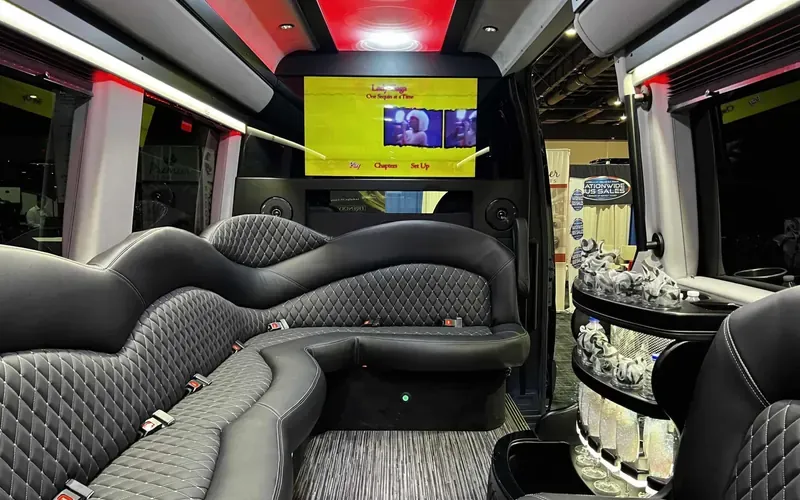
The vehicle you choose sets the shape of the photo tour. A stretch limousine or an SUV limo keeps the wedding party together and makes a strong backdrop at each stop, while a Sprinter van is easier for a gown and gives standing room between locations. For a larger group or a route that includes guests, a party bus or shuttle holds everyone in one place. Our wedding photo tour transportation page explains how the vehicle and the route fit together.
Hours are the part couples underestimate. Every stop has a walk, a setup and a walk back, and the car needs time to move between them. We build the run sheet around your ceremony and reception times, list each stop with an arrival and departure, and share it with you or your planner before the day. On the day, the chauffeur stays in touch with your planner or a named contact, so a change in the weather or the schedule is handled without a scramble.
Every quote is written and itemized before booking, covering the vehicles, hours, gratuity, tolls, parking and any décor requests, and nothing is booked until you accept it. That way you can see what a longer photo tour costs before you commit to the route. When you are ready to plan, get a free wedding quote and we will put the photo stops, the timing and the vehicles into one written plan.