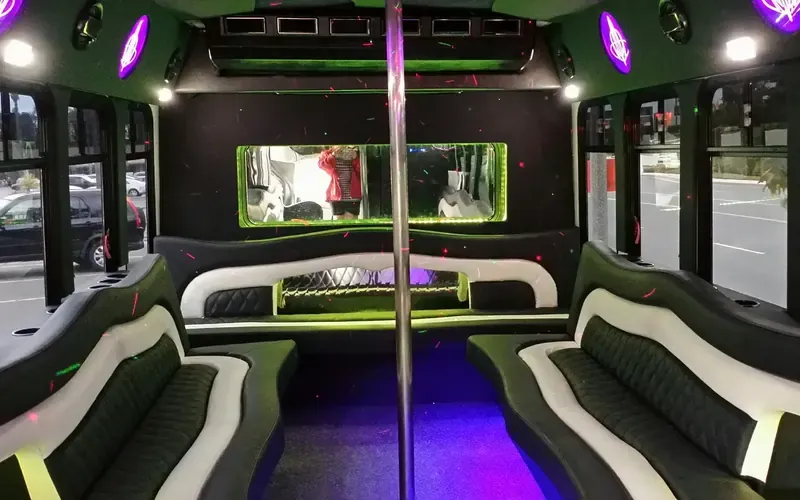
Planning indian wedding baraat transportation dc comes down to three choices: a horse and dhol, a vintage or classic car, or a limousine carrying the groom and his party. Each one works, but each one asks something different of your route, your timing and your budget. The right answer depends on where your venue sits and how many people are walking behind the groom.
This guide walks through how a baraat actually works in Washington DC, Northern Virginia and Maryland. We cover horse logistics and handlers, vintage and classic cars, limousines and party buses, route and permit questions, weather and timing, and how the baraat connects to the milni, the ceremony and the reception transport that follows. It is written for couples and planners who want the arrival to feel joyful rather than rushed.
Key takeaways
- Decide early whether the baraat is a walking procession, a vehicle arrival or a mix of both, because the choice shapes your whole morning.
- Horses need a handler, a quiet staging area and a route checked for traffic, sirens and crowds before you book one.
- Vintage and classic cars are arranged on request only, and availability is confirmed when you book.
- A limousine or party bus keeps the groom's party together and gives older relatives a place to sit and stay warm.
- One written run sheet shared with your planner keeps the baraat, milni and ceremony from colliding.
What a baraat looks like in Washington DC
A baraat is the groom's procession to the ceremony, and in its classic form the groom travels on foot or on horseback surrounded by his family and friends, with a dhol player setting the pace and the dancing starting well before anyone reaches the venue. In South Asian wedding planning the baraat is often the loudest, most photographed and most joyful part of the day, and it is also the part with the least tolerance for delay, because the milni, the ceremony and everything after it are timed from the moment the groom arrives. In Washington DC, Northern Virginia and Maryland the procession usually has to fit into a smaller footprint than it would at home, so the planning question becomes where the group gathers, how long the walk or ride lasts and where the music stops.
In the city, baraats tend to happen in one of three settings. Some couples use a hotel driveway or forecourt in downtown DC as the staging point, with the groom arriving by car and the party walking the last block or two to a church, hotel ballroom or event space. Others use a park edge or plaza near the venue, where there is room for a dhol, a few hundred feet of dancing and photographs before the group goes inside. A third option is a suburban venue in Fairfax, Loudoun, Montgomery or Prince George's County with its own parking lot or lawn, where the baraat can be contained on private property and the noise and traffic questions are easier to answer.
The scale varies enormously. A baraat can be a groom, two dozen relatives and one dhol player walking a couple of blocks, or several hundred guests arriving in waves with a horse, a car and a bus behind them. What stays constant is the structure: a gathering point, a short procession, a meeting with the bride's family at the milni, and then a handoff into the ceremony. The transportation piece is really about the gathering and the handoff, because if the groom's side arrives scattered and late, the procession loses its shape before it starts. That is why the arrival plan deserves the same attention as the ceremony itself.
It also helps to know what a baraat is not. It is not a parade that can take over a public street at will, and it is not a performance that can run past its welcome at a venue with neighbors. In this region, the most successful baraats are the ones that borrow a little space for a short time, whether that is a hotel driveway, a private lawn or a permitted block, and then move inside before the energy fades. Couples who plan the baraat around a specific location, rather than hoping the street outside the venue will work, tend to have a much calmer morning.
Indian wedding baraat transportation in DC: horse, vintage car or limo
The three main choices differ in feel, group size, space and planning lead time. A horse and dhol feels traditional and draws a crowd, but it needs a handler, a staging area, a clean surface and a venue that welcomes an animal on the property. A vintage or classic car gives the groom a formal, photogenic arrival and is easy to contain, though availability is confirmed on request and the car may not suit a large walking party. A limousine or party bus keeps the groom's side together and out of the weather, moves a lot of people at once and is the simplest option to slot into a tight timeline.
Most couples end up combining two of the three rather than choosing one. A common pattern is the groom's party traveling by limo or party bus to a staging point, then the groom finishing on foot or by horse for the last stretch, with the car or bus waiting to take the group on to the reception. The table below compares the options on the things that actually shape the morning.
| Option | Feel | Group size it suits | Space and planning notes |
|---|---|---|---|
| Horse with dhol | Traditional, ceremonial, draws a crowd | Groom plus a walking party of any size | Needs handler, staging area, firm clean surface and venue approval; confirm rules with venue and local authorities |
| Vintage or classic car | Formal and photogenic, quiet arrival | Groom and a small group of immediate family | Availability confirmed on request; needs a drop-off point close to the milni |
| Rolls-Royce, Bentley or electric car | Understated luxury, strong for photos | Groom and one or two others | Availability confirmed on request; check entry and exit ease in wedding attire |
| Stretch limousine | Classic wedding arrival for the groom's side | Up to 8–10 guests | Easy to park at a hotel or venue; good for a short procession with a walk at the end |
| Escalade or SUV stretch limo | Limo style with more room | Up to 12–20 guests | Keeps a larger groom's party together; needs a drop-off wide enough for the group |
| Sprinter limo van | Easy entry in a sherwani or gown | Up to 10–14 guests | Standing room and a simple step-in; useful when the staging point is a hotel |
| Wedding party bus | Loud, social, built for a big group | Up to 20–40 guests | Best when the whole groom's side travels together; needs a lot or wide curb at both ends |
Horse and dhol: what to plan for
A horse adds a great deal to a baraat, and it also adds a set of practical questions that need answers before the day. The horse, the handler and the dhol all need somewhere to wait, a surface to walk on and a clear start and finish point. Because rules vary by jurisdiction and by property, we always tell couples to confirm what is allowed with the venue and the relevant local authority rather than assume a street, park or driveway will permit an animal.
- Handler and animal welfareThe horse should come with an experienced handler who stays with the animal throughout and knows how it reacts to drums, crowds and traffic.
- Staging areaIdentify a quiet spot where the horse can be unloaded and wait, ideally out of the main guest flow and away from loud music until the procession begins.
- Surface and footingPaved lots, gravel and grass all behave differently; ask about the route surface in advance and avoid slopes, steps and slick stone.
- Noise and the dholDrums are part of the joy, but check how close the dhol can be to the horse and give the animal a few minutes to settle before the music starts.
- Crowd controlGuests will want photos; agree with the planner who keeps the walking lane clear so the horse is not surrounded at the milni.
- Route lengthKeep the mounted stretch short and scenic rather than long, especially in heat or cold, and plan a clear dismount point near the ceremony entrance.
- Venue and authority approvalConfirm in writing whether the venue allows animals on the property and whether the surrounding street or park has any restrictions.
- Weather backupDecide in advance what happens if it rains or the temperature is extreme, and whether the horse is replaced by a car or the procession moves indoors.
Vintage and classic cars for the groom's arrival
A vintage or classic car gives the groom a formal, unhurried arrival that photographs beautifully against DC's stone facades, tree-lined streets and hotel entrances. The appeal is the contrast: the groom steps out of a car that looks like it belongs to another era, and the procession begins from there. It suits couples who want the baraat to feel elegant rather than loud, and it works especially well when the venue has a covered entrance where the car can pull up and wait.
Rolls-Royce, Bentley, vintage, classic and electric cars are not part of our regular fleet list, so we describe them here in general terms and confirm availability on request. If a specific make or era matters to you, raise it early, because the cars that photograph best are often booked far ahead and the choice narrows as the date approaches. When availability is confirmed, the details go on the written quote like everything else, including the arrival time, the drop-off point and how long the car stays.
Practical questions matter as much as the badge on the hood. A low-slung classic car can be awkward to enter in a sherwani or a heavy lehenga, and an older vehicle may not have the air conditioning or space for a small group of family members who want to ride with the groom. Think about who travels with him, where the car waits during the ceremony and whether it needs to reappear for the reception or the photo tour. A beautiful car that arrives at the wrong door, or leaves before the milni photos are finished, helps no one.
For couples who want a classic look without committing to a particular vehicle, a well-presented luxury sedan or SUV can carry the groom and his parents with the same formal feel and far less uncertainty. The point is the arrival, not the marque. Decide what the groom should step out of, how many people should be with him at that moment, and let the vehicle follow from that.
Limos, party buses and keeping the groom's side together
For most baraats in this region, the groom's side travels together, and the vehicle choice follows from the headcount. The cards below match our fleet to typical baraat groups, from a small party arriving in one stretch limousine to a large group that needs a bus and a second vehicle behind it.
Stretch limousine for a small groom's party
The stretch limousine carries up to 8–10 guests and suits a groom traveling with his brothers and closest friends. It is easy to park at a hotel or venue and gives the group a single, tidy arrival point. For a baraat with a walking procession at the end, the limo drops the party a short block from the milni and waits nearby.
Escalade limo for a larger party in limo style
The Escalade limo seats up to 12–14 guests and keeps the limousine feel while giving a bigger group room to travel together. It works well when the groom's cousins and close family want to arrive as one unit. Confirm the drop-off point can hold the group while photos are taken.
SUV stretch limo for the whole wedding party
The SUV stretch limo carries up to 14–20 guests, which is often enough for the entire wedding party in one car. That matters on a baraat morning when you want everyone in the same place at the same time. It also gives the planner one vehicle to track instead of three.
Sprinter limo van for easy entry
The Sprinter limo van seats up to 10–14 guests and offers standing room and a simple step-in, which helps when the groom and his party are in layered formalwear. It is a practical choice for a hotel staging point where the group boards indoors and steps out close to the venue.
Wedding party bus for a big baraat
The wedding party bus carries up to 20–40 guests and is built for the social, loud side of a baraat. It keeps a large groom's side together, gives the dhol players and dancers room to keep the energy up between stops, and handles the reception run afterward. Check that both the hotel and the venue have space for a bus to load and unload.
Sedans and SUVs for parents and VIPs
The luxury sedan and SUV options carry up to 3–6 guests and are the right choice for the groom's parents, grandparents and any guests who should not be standing in a crowded staging area. They can follow the main party and arrive at the milni without the bustle.
Mixing vehicles for a multi-part morning
Many baraats use more than one vehicle: a bus for the wider group, a limo or classic car for the groom, and a sedan for his parents. A multi-vehicle wedding plan keeps each group moving on its own schedule and is written into the same run sheet as the ceremony.
Route planning around DC streets, bridges and venues
A baraat route in DC has to respect the city. Downtown blocks are short, intersections are busy and a group walking or dancing in the street will draw attention from traffic and police alike. If you want any part of the procession on a public street, treat it as something to confirm with the relevant local authority well in advance rather than something to arrange on the morning. Most couples avoid the question entirely by staging on private property, such as a hotel forecourt or a venue lawn, and walking only within that footprint.
Bridges shape the route more than most couples expect. If the groom's party is staying in Virginia and the ceremony is in DC, or the other way around, the crossing over the Potomac or the Anacostia adds time and unpredictability that a tight baraat schedule cannot absorb. Build in a buffer, choose a staging point on the same side of the river as the venue where possible, and keep the procession itself short so a delayed crossing does not eat into the milni. The same logic applies to venues in Maryland, where the Beltway and the radial roads into DC can turn a short distance into a long drive.
Hotels are the most common staging points, and they come with their own logistics. A downtown hotel may have a narrow driveway shared with other guests, a porte-cochère with limited standing room, or a loading zone that cannot hold a bus for long. Ask the hotel where a baraat group can gather, where a horse or a large vehicle can wait, and what time the space is available. Then confirm the venue's side of the handoff: which entrance the groom's party uses, where the milni happens and who from the venue is expecting you. For more on matching transport to specific parts of the region, see our service areas page.
The best routes are the simplest ones. A short, well-rehearsed walk from a hotel to a venue entrance, or a procession contained on a private lawn, will always feel better than a long route that depends on several things going right at once. Drive the route at the same time of day as the baraat if you can, note the load-in points and the places a bus cannot stop, and share what you find with your planner and your driver. That small piece of homework prevents most of the problems that show up on the day.
Timing the baraat against the milni and ceremony
A baraat works best when it is built backward from the ceremony start. Give yourselves a fixed arrival time at the venue, then work out how long the walk, the dancing and the milni will take, and let that set when the groom's transport leaves the hotel. Below is a sequence that holds up at most DC-area venues; adjust the minutes to your own plan and confirm the ceremony time with your officiant and planner.
- Groom's party assemblesEveryone meets in the hotel lobby or a family home, with the dhol player and any decorations already in place, so the vehicles load once and leave on schedule.
- Vehicles departThe groom's car or bus leaves with a small buffer for traffic, parking and the walk to the baraat start point, which is often a block or two from the venue entrance.
- Baraat beginsThe dhol starts, the groom's side gathers behind the car or horse, and the group moves toward the venue at a walking pace rather than a rush.
- MilniThe bride's family meets the groom's party at the entrance or a set point, with garlands and greetings; allow enough time for photos before anyone is asked to move inside.
- Guests move inUshers and planners guide guests to seating or the pre-ceremony gathering while the couple's families finish greetings and pictures near the door.
- Ceremony startThe officiant begins once the couple, the families and the priest or celebrant are in place, so build a small cushion rather than cutting the milni short.
- Post-ceremony transportVehicles reposition for the reception run, the photo tour or the getaway, depending on what your run sheet says for the rest of the day.
Weather, seasons and the outdoor baraat
Summer in Washington DC can be hot and humid, and a baraat that stretches twenty minutes in the sun will tire elders and children quickly. Plan the walk for early morning or late afternoon where the schedule allows, keep water nearby, and treat the groom's vehicle as a cool retreat where grandparents can sit with the air conditioning running. A stretch limousine, an SUV stretch or a Sprinter limo van gives you that option without splitting the party.
Winter baraats bring the opposite problem: cold, wind and the chance of ice on steps and sidewalks. A car or bus that stays warm and close to the entrance matters more than the length of the procession, and a chauffeur who can hold at the curb while the group gathers saves everyone from standing in the cold. Keep the outdoor portion short, move the milni indoors if the venue allows, and confirm with the venue which entrance stays open and cleared in winter weather.
Rain is the plan most couples forget. Ask your venue where a baraat can gather under cover, whether a covered porte-cochere or lobby is available, and how the group would move from the drop-off to that point. A vehicle gives you a dry place to wait and to store garlands, shoes and extra layers, and it lets you shorten the outdoor walk without cancelling the arrival. Build the rain version into the run sheet so the dhol player, the planner and the chauffeur all know the alternate meeting point.
Season also shapes your guest count and your route. Spring and fall are the busiest wedding months in the region, which means more traffic near popular venues and parks, while summer weekends bring road closures for festivals and events. Check the DC, Virginia or Maryland transportation department and your venue for known closures in the days before, and tell your chauffeur about any parade, race or construction on the route. None of this is unusual; it just needs to be written down early.
Guest shuttles and the rest of the day's transport
The baraat is one moment in a long day, and the transport plan should treat it that way. Most couples pair the groom's arrival with guest shuttles from hotels to the venue, a separate run for the bridal party, and a getaway car for the end of the night. Booking these as one plan, rather than piece by piece, keeps the timing consistent and means one company knows the whole day.
Guest shuttles usually run on a loop between the hotel block and the venue, and the baraat affects when the first shuttle should arrive. If guests are invited to watch the baraat, they need to be at the venue before the groom's party, not after. A shuttle bus or mini coach handles that move well, and a party bus can carry the groom's side to the baraat start point if the group is large and the walk is short.
The bridal party has its own logistics on the same morning. The bride's side is often getting ready at a hotel or family home and needs its own vehicle and timing, separate from the groom's arrival. A stretch limousine or Escalade limo works for a smaller bridal party, while an SUV stretch limo keeps a larger group together. Write both sides into the same run sheet so neither is waiting on the other.
After the ceremony, the day keeps moving: photos, the reception entry, and eventually the getaway. If you are planning a photo tour around the Mall, the monuments or a favorite neighborhood, the vehicles need to reposition while guests are at the reception. A multi-vehicle plan lets the baraat car, the guest shuttles and the getaway car each do their job without one vehicle trying to be everywhere at once.
Working with your planner and one written run sheet
A baraat involves more moving parts than most wedding moments: a dhol player, a horse handler or a chauffeur, the groom's family, the bride's family, ushers and a venue contact. The single most useful thing you can do is put all of it on one written run sheet with times, names and phone numbers. We write a run sheet for every wedding and share it with the couple or their planner, so the chauffeur and the baraat party are working from the same document.
On the day, the chauffeur stays in touch with the planner or a named contact rather than trying to coordinate a crowd. That contact is usually the planner, a sibling or a cousin who knows the family and can make a quick call if the baraat runs long or the start point changes. Give that person the chauffeur's number and make sure they are the one the venue and the dhol player also call.
The run sheet should cover the small things that cause delays: where the groom's party meets, who carries the garlands, where the vehicles park, which entrance the baraat uses, and what happens if it rains. It should also note the ceremony start time and the point at which the officiant expects the couple in place. When everyone can see the same schedule, the baraat can run a few minutes over without anyone panicking.
If you are working with a planner, share the run sheet with them early and ask them to flag anything that conflicts with the venue's rules. If you are planning without one, a wedding day coordination service or a trusted family member can play that role. Either way, the goal is the same: one document, one contact, and a chauffeur who knows exactly where to be and when.
Cultural wedding transportation across the cluster
The baraat is one part of a wider set of cultural wedding traditions that shape transport in Washington DC. Our cultural wedding transportation page covers how we plan for ceremonies with multiple events, processions and family roles, and it is the best place to start if your wedding spans more than one tradition. From there, the cluster of posts below goes deeper into specific communities and logistics.
For South Asian weddings with several days of events, transportation planning for large South Asian weddings covers mehndi, sangeet, haldi and the wedding day itself. Couples blending two ceremonies in one day will find fusion weddings: logistics for two ceremonies in one day useful for timing and vehicle changes. Jewish, Nigerian and African weddings each have their own arrival and processional customs, covered in the Jewish wedding day timeline and Nigerian and African wedding transportation ideas.
Church-based ceremonies bring their own timing and parking questions, which the Catholic wedding day timeline for DC churches and our church wedding transportation page address. Couples planning an LGBTQ+ wedding can read planning an LGBTQ+ wedding in Washington DC, and military families will find military weddings in DC and Annapolis helpful for traditions and base access. Smaller ceremonies are covered in how to get married at the DC courthouse and elopement ideas in Washington DC.
Planning the baraat transportation
Start with the shape of your baraat: horse, vintage or classic car, limousine or party bus, and how many people will walk behind the groom. Then map the route from the hotel or family home to the venue, including the drop-off point and the walk to the entrance. Once those two things are clear, the vehicle choice usually makes itself, and the timing falls into place around the ceremony.
Every quote we write is itemized before booking, covering vehicles, hours, gratuity, tolls, parking, décor requests, deposit and cancellation terms. Nothing is booked until you accept it, which gives you and your family time to compare options and adjust the plan. If you want red carpet, "Just Married" signs or other touches, tell us when you book so they appear on the quote; they are arranged on request rather than included by default.
Alcohol, where it is part of your celebration, is only for guests 21 and older and only where the vehicle and DC, Virginia or Maryland law allow it. That policy is written on your quote so there are no surprises on the day. If your plans include a vintage or classic car, or a Rolls-Royce, Bentley or electric car, note that these are not in our standard fleet list and availability is confirmed on request.
When you are ready, request a free wedding quote with your date, venue, guest counts and the events around the wedding. We will put together a written plan you can share with your planner and family, and adjust it until it fits. The earlier you start, especially for a fall or spring Saturday, the more room you have to choose the arrival that feels right for your baraat.