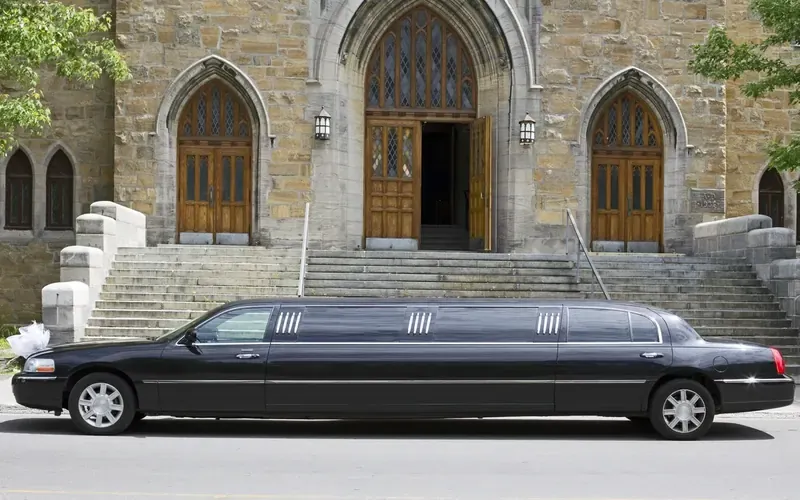
This wedding transportation guide is for couples marrying in and around the capital. Wedding transportation in Washington DC works best when you plan it the way you plan the ceremony: around a fixed time, a fixed place and the people who have to be there. Between the District's bridges and traffic circles, Virginia's wine country roads and Maryland's Beltway, the car decisions follow from your venue and your guest list, not the other way around.
This guide covers the whole picture: how many vehicles you need, how many hours to book, who rides with whom, timing the run from hotel to church to reception, what belongs on a written quote, and the local questions to ask before you sign. It is the starting point for the rest of our planning posts, and it points you to the ones that go deeper.
Key takeaways
- Start with your venues, ceremony time and guest list; the vehicle list follows from those three things.
- Book one written run sheet that every driver, planner and contact works from on the day.
- Allow time for DC traffic, bridges and parking, especially on a Saturday afternoon.
- Confirm what is written on the quote, including décor, gratuity, tolls and parking.
- Ask how alcohol is handled for guests 21 and older and where law allows it.
What wedding transportation in Washington DC actually involves
Wedding transportation is not one job but a set of jobs that happen on the same day, often in different parts of the region. The couple needs to arrive at the ceremony calm and on time. The wedding party needs to travel together, or in two groups, from where they are getting ready to the church or venue. Parents and grandparents need a quiet, comfortable ride that does not require them to climb into a tall vehicle. Each of these is a separate trip with its own start time, and each one has to fit around the others.
Then come the trips that are easy to forget until the week of. A guest shuttle may run from a hotel block to the ceremony and back again, then repeat for the reception. A photo tour takes the couple and often the wedding party to a few locations between the ceremony and dinner. The getaway car waits at the reception and takes the couple to their hotel at the end of the night. The events around the wedding, from the rehearsal dinner to a next-day brunch, can each need a vehicle of their own.
What ties all of this together is a written plan rather than a single booking. Our wedding transportation service is built around one run sheet per wedding, shared with the couple or their planner, with the chauffeur in touch with a named contact on the day. That document is what turns a list of vehicles into a sequence that works, and it is where most of the planning effort should go. The rest of this guide walks through that planning in order.
Start with your venues, not the vehicle list
Before you open a fleet page, write down the addresses that matter: where each of you is getting ready, the ceremony site, the reception venue, the hotel block and the parking situation at each. A District church, a hotel block in Arlington and a reception at a Virginia estate create three separate trips and a set of return journeys. Those addresses, not the vehicle list, tell you how many cars and hours you actually need, and they tell you which parts of the day are tight.
The gaps between those addresses matter as much as the addresses themselves. A ceremony that ends at noon and a reception that starts at five leaves a photo window in the middle, and that window has to be spent somewhere specific. If your reception venue opens its doors to you for photos, the plan is simpler than if you are driving to a park or a landmark. If your ceremony and reception are in the same building, you may need far less driving than you expect, and the budget can go toward guest shuttles instead.
This is also the point to check the practical details at each site. Ask about loading zones, where a longer vehicle can stop, whether the venue has a driveway or a drop-off point, and what time the room is available to you. Our wedding venues page covers the kinds of places we serve across the District, Virginia and Maryland, and it is a useful check on your own list. Once the addresses and the gaps are settled, choosing vehicles becomes a much shorter conversation.
How many vehicles you need for your guest count
The number of vehicles follows from who is traveling together and how far they are going. A couple on their own needs one car; a wedding party of sixteen needs one large vehicle or two smaller ones; a hotel full of guests needs a shuttle that runs back and forth. The table below matches common groups to the seat ranges in our fleet, so you can see roughly where your wedding lands before you talk to anyone.
Treat these as starting points, not rules. A group of twelve may prefer two sedans if the parents want quiet, and a party of ten may want the standing room of a van so nobody is climbing out of a gown. The exact vehicle is always confirmed on your written quote, so you know what is arriving rather than what you hope is arriving.
| Group | Typical size | Vehicle type | Best for |
|---|---|---|---|
| Couple only | 2 | Stretch limousine or luxury sedan/SUV | Arrival at the ceremony, the getaway |
| Couple plus parents | 4–6 | Luxury sedan and SUV | Parents and grandparents, VIP guests |
| Small bridal party | 6–10 | Stretch limousine or Sprinter limo van | Getting-ready run to the ceremony |
| Larger bridal party | 10–14 | Escalade limo or Sprinter limo van | Limo style with easy entry in a gown |
| Whole wedding party | 14–20 | SUV stretch limo | Everyone in one car for photos |
| Big party and friends | 20–40 | Wedding party bus | Photos, the reception run, the after-party |
| Guest shuttle | 25–56 | Shuttle bus or mini coach | Hotel to ceremony and reception loops |
Matching the car to the job
Each transport job on your day has its own requirements, and the same vehicle rarely suits all of them. A car that works for a quiet arrival may be the wrong choice for a party of eighteen heading to photos. Read down this list against your own run sheet and note which jobs you have.
The bride's car needs a calm arrival, a place to pause before the doors open, and space for a dress. Our bride transportation page covers that run in detail.
The groom and groomsmen usually travel separately and earlier, often with a stop for photos or a last check at the venue. See groom and groomsmen transportation for how that trip is timed.
The full wedding party needs one vehicle that keeps everyone together, which is what bridal party transportation is planned around. Standing room and easy entry matter more than style when half the group is in floor-length dresses.
Parents and grandparents need comfort, a low step and a quiet ride, which is where the luxury sedan and SUV come in. If they are hosting or greeting, they may also need to arrive before the couple.
Guest shuttles are a loop rather than a single trip, and they need to run often enough that no one waits long at the hotel. Our wedding guest shuttle and hotel to venue shuttle pages explain how the loops are built.
The photo tour needs a vehicle that can wait, move between locations and hold the couple plus whoever is in the pictures. See wedding photo tour transportation for how that window is planned.
The getaway car is the last job of the night, and it needs to be waiting and ready when you are. Our getaway car page covers the end-of-night handoff.
How many hours to book, and when the clock starts
Hours are the part of a wedding transportation quote that couples most often get wrong, usually by underestimating. A booking is not measured from the moment you step in; it starts when the chauffeur reports, which is before your pickup time, and it runs until the vehicle is released. That early window covers the drive to you, any staging, and the buffer you built into the plan. Ask on the quote when the clock starts and when it stops, and write both down.
Think of the day in three blocks. The ceremony block covers the getting-ready run and the arrival, and it is short but unforgiving. The photo window sits between the ceremony and the reception, and it is the block that expands without warning, because a receiving line runs long or a group photo takes another twenty minutes. The reception run covers the trip to the venue and, if you have a shuttle, the loops that continue through the evening. Each block has its own vehicle needs.
The honest answer to how many hours you need is that it depends on your venues and your gaps, not on a formula. A wedding with the ceremony and reception in one building may need only a few hours of car time; a wedding with a church in the District, photos at a landmark and a reception in Virginia wine country may need a full afternoon. Our post on how many hours to book a wedding limo works through the math, and the month-by-month booking timeline helps you decide when to reserve.
Building a transportation timeline that survives DC traffic
A timeline that works in DC is built with slack in the right places, not with a single buffer at the end. The sequence below is a sample, and the exact times depend on your ceremony time, your venues and how far apart they are. Our guide to building a wedding day transportation timeline includes a template you can fill in.
Hotel pickup for the wedding party: Allow time for everyone to gather in the lobby before the vehicle is loaded, and set the pickup earlier than the drive alone would suggest.
Getting-ready arrival: The bride and party arrive at the getting-ready location with enough time to dress and for any photos before the ceremony, with a margin for the unexpected.
Ceremony arrival: Aim to be at the church or venue well before guests are seated, and confirm with the venue where the vehicle can stop and wait.
Guests and family: Parents and grandparents arrive before the couple, and the guest shuttle makes its first drop-off early enough that no one is walking in as the processional starts.
Photo window: Build in extra time for the drive between photo locations and for the group to regroup between shots, especially if you are crossing a bridge.
Reception arrival: Plan to arrive before your guests are seated for dinner, and give the venue a call when you leave the last photo stop.
Evening shuttles: If a shuttle is running guests back to the hotel, set the first departure before the dancing ends and keep the loop predictable.
Getaway: Have the car waiting and ready before your send-off, with the route to the hotel or after-party confirmed in advance.
Routes, bridges and parking in the District, Virginia and Maryland
Start with the map. A wedding that moves from a hotel in the District to a church in Arlington and back to a reception on Capitol Hill crosses water twice, and each crossing has its own habits at rush hour and on a Saturday afternoon. The Key Bridge, the Theodore Roosevelt Bridge, the Arlington Memorial Bridge and the 14th Street Bridge all feed different parts of the city, and the one you pick changes the length of the run. Write the route down before you book hours, not after.
Traffic circles and one-way grids slow things down more than distance does. Dupont Circle, Logan Circle, Thomas Circle and the wide intersections around the Mall reward a chauffeur who knows which lane to be in, and event days around the National Mall, the Convention Center or a stadium can close streets with little warning. Build slack into the run to the ceremony and treat the trip to the reception as the flexible part of the day.
Drop-off points and parking belong on the quote. Some churches and hotels have a loading zone or a staffed entrance; others leave a limousine circling the block. Tell us the venue addresses early so parking and any permit questions can be written into the itemized quote rather than discovered on the day. In Virginia and Maryland the same rule applies on a smaller scale: Old Town Alexandria's streets, the roads out to Loudoun County and the Beltway all behave differently, and the run sheet should say where the car waits.
Who rides with whom
The couple usually rides alone on the way to the ceremony and together on the way out, and that shape decides the first vehicle. A stretch limousine or a luxury sedan and SUV suits that job, while a Sprinter limo van gives a bride room to stand and step out without gathering a gown on the way. If the couple wants to arrive separately, plan two vehicles or two runs and write both on the run sheet so nobody waits on a car that is already gone.
The wedding party is a numbers question more than a style question. A small bridal party fits in an Escalade limo, a full party of fourteen to twenty fits in an SUV stretch limo, and a large group with photos on the agenda suits a wedding party bus. Parents, grandparents and VIP guests are often better served by a separate sedan or SUV so they arrive early, leave when they choose and never wait on the party bus. Our guide to seating plans for every wedding vehicle walks through each configuration.
Two details are easy to forget. First, the people who need help getting in and out, or who tire easily, should not be in the last car of a convoy. Second, the person holding the rings, the marriage license or the vows should know which vehicle they are in and where it is parked. Put both on the run sheet, share it with your planner, and the seating plan stops being a diagram and starts being a plan.
Guest shuttles: hotels, venues and the trip back
A guest shuttle is a loop, not a single trip. Guests leave a hotel in waves, arrive at the ceremony or reception, and then need a ride back at the end of the night, often later than anyone planned. Work out the loop with your venue and hotel first: where the bus can stop, who is allowed to board, and how long the loading takes with a full coach. A shuttle bus and mini coach carries up to 25 to 56 guests, which usually covers a room block in one or two runs.
The last run is the one that matters. Decide in advance what time the final departure leaves, tell guests that time in writing, and give the driver a named contact who can be reached if the schedule moves. If your reception ends with a send-off, the shuttle should be positioned before it starts so guests are not standing on a curb waiting. Our post on hotel to venue shuttles covers the loop in detail, and the wedding guest shuttle page explains how we build one.
Tell guests what to expect before the weekend, not at the hotel desk. Put the pickup point, the first departure, the last departure and the return plan on your wedding website and in the welcome bag, and ask the hotel to keep the information at the front desk. Guests who know the shuttle exists and when it leaves use it; guests who find out at midnight take a different route home.
What belongs on your written quote and contract
Every quote we write is itemized before anything is booked, and nothing is reserved until you accept it. Read it the way you read a venue contract: the details you do not see are the ones that surprise you later. The list below covers what should appear in writing, and our wedding limo contract checklist goes through each item in full.
- Vehicles and hoursThe exact vehicle or class, the number of hours booked, and when the clock starts and stops.
- GratuityWhether the chauffeur gratuity is included, how it is calculated and whether it appears as a line item.
- Tolls and parkingWho pays bridge tolls, garage fees and venue parking, and how those charges are handled.
- Décor requestsRed carpet, signs and other touches, arranged when booked and written on the quote rather than assumed.
- Alcohol policyThe rules for guests 21 and older, and where the vehicle and DC, Virginia or Maryland law allow it.
- Deposit and cancellationThe amount due to hold the date, the schedule for the balance, and the terms for changes or cancellation.
- Run sheet and contactThe written run sheet shared with you or your planner, and the named contact the chauffeur stays in touch with.
- ChangesHow additional hours, extra stops or a vehicle swap are priced and confirmed before the wedding day.
Special situations: cultural weddings, wine country and elopements
Some weddings run on more than one schedule. A cultural celebration may include a morning ceremony, a tea ceremony, a lunch and an evening reception, with different groups moving at different times and elders who need door-to-door care. That is a multi-vehicle day, and the multi-vehicle wedding transportation page explains how the runs fit together. Our post on cultural wedding transportation covers the questions to ask about timing, dress, food and family roles before you book.
Virginia wine country weddings add distance. Venues around Leesburg, Middleburg and the Loudoun County roads sit well outside the Beltway, and the drive from a DC hotel can take longer than the map suggests on a fall Saturday. Book hours for the round trip, not just the arrival, and plan the guest shuttle around the last road out. The Virginia wine country wedding transportation page covers the routes and the questions to settle early.
Elopements and courthouse weddings need less vehicle but more precision. A single sedan or SUV, a short window and a clear pickup point are often enough, and the couple may want a photo stop on the way. Our guide to elopement and courthouse wedding cars covers the timing. For classic cars, Rolls-Royce, Bentley or vintage models, availability is confirmed on request and written on the quote; they are not part of our listed fleet.
Planning the transportation, from first quote to final run sheet
The sequence is simple if you start early. Settle the venues and the ceremony time, sketch the runs, count the people in each one, then ask for quotes with those numbers in hand. Our month-by-month post on when to book your wedding limo sets out a sensible order, and the wedding transportation page shows the services a quote can cover, from bride and groom cars to guest shuttles and the getaway car.
Once you have the quote, compare it line by line rather than by the total. Hours, gratuity, tolls, parking and décor are where quotes differ, and the wedding transportation budget post helps you decide what to set aside. When you accept, you get one written run sheet shared with you or your planner, and on the day the chauffeur stays in touch with your named contact so a late ceremony or a photo stop does not unravel the rest of the schedule.
The last step is the run sheet itself. Build it from the ceremony time backward, give every vehicle a first pickup and a last drop-off, and note who is responsible for each group. Our free wedding day transportation timeline template gives you the structure. When you are ready to put numbers to your own day, get a free wedding quote and we will write it out, itemized, before anything is booked.