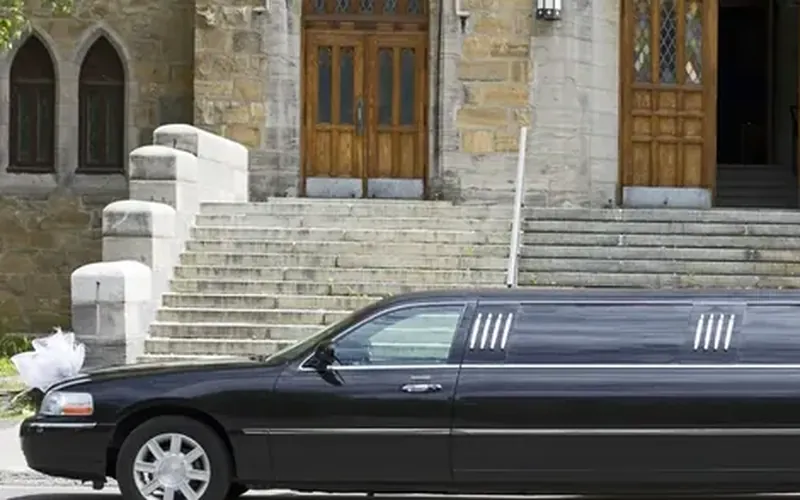
A good set of wedding vehicle seating plans answers one simple question: who rides with whom, and when. Get it right and the morning runs calmly, the wedding party stays together and nobody is left standing on a curb wondering which car is theirs. Get it wrong and you spend the day moving people between vehicles instead of enjoying the day.
This post walks through seating for every vehicle in a typical wedding fleet, from a two-person sedan to a fifty-seat coach. It covers the couple, the wedding party, parents and guests, plus the practical details that decide a plan: dress, mobility, photos and the run sheet. For the wider picture, start with The Complete Guide to Wedding Transportation in Washington DC.
Key takeaways
- Match each group to a vehicle size so nobody rides alone or stands in the aisle.
- Keep the couple and the wedding party in separate cars when the schedule allows it.
- Give parents and grandparents their own sedan for comfort and easy arrival.
- Write names, not just groups, on the run sheet so chauffeurs know who is expected.
- Book décor, alcohol and special touches in advance so they appear on the quote.
Start With the Groups, Not the Cars
Before you look at a single vehicle, list the people who need to travel together. Most weddings break into a handful of riding groups: the couple, the bridesmaids, the groomsmen, the parents, the wider family and the guests. Each group has its own starting point, its own arrival time and its own reason for staying together. Once those groups are on paper, matching them to cars is straightforward.
A riding group is not the same as a guest list. It is the set of people who leave one place at one time and arrive somewhere together. Two bridesmaids getting ready at a hotel near the venue belong with the group leaving that hotel, not with the party assembling across town. Write each group with a pickup address, a time and a headcount, and the shape of the day starts to appear.
This is also the moment to think about the whole plan rather than one car. A multi-vehicle wedding works when each vehicle has a clear job and a clear group, and falls apart when people are shuffled between cars on the morning itself. Assign every rider to a group before you assign any group to a vehicle. If you want the wider view first, our complete guide to wedding transportation in Washington DC walks through the whole day from booking to last drop-off.
Wedding Vehicle Seating Plans by Car Type
The table below pairs each vehicle in a typical fleet with its seat range and the group it suits best. Treat the ranges as guides: the exact vehicle and its capacity are confirmed on your written quote, and luggage, dresses and photo equipment all take up room.
A larger vehicle is not automatically the better choice. A party bus that holds forty people is wasted on six bridesmaids, and a sedan cannot carry the wedding party. Match the group to the car, not the car to the budget line.
| Vehicle | Typical seats | Best group |
|---|---|---|
| Stretch Limousine | 8–10 | The couple, or a small bridal party |
| Escalade Limo | 12–14 | A larger party that wants limo style |
| SUV Stretch Limo | 14–20 | The whole wedding party in one car |
| Sprinter Limo Van | 10–14 | Easy entry in a gown, with standing room |
| Wedding Party Bus | 20–40 | Big parties, photos and the reception run |
| Shuttle Bus & Mini Coach | 25–56 | Guest shuttles between hotel and venue |
| Luxury Sedan & SUV | 3–6 | Parents, grandparents and VIP guests |
The Couple and the Wedding Party
The couple's plan depends on whether they get ready together or apart. If they are apart, each needs a way to the ceremony and a decision about who travels with them. Some couples ride separately and meet at the ceremony; others share a car from the start. Either works, as long as the run sheet says which, and the chauffeur knows where each person is waiting.
Bridesmaids usually travel as one group and groomsmen as another, because they tend to get ready in different places. Keep those groups intact on the way to the ceremony so nobody arrives alone and nobody is left behind. After the ceremony, many couples combine the parties into one vehicle for the photo tour and the reception run, which is where a larger car earns its place.
For the party itself, the useful question is how many people need to be in the same car at the same time. A stretched SUV or party bus keeps the whole group together for photos and the arrival. Our bridal party transportation page covers the timing and staging in more detail, and your planner can confirm who is where before the first pickup.
Parents, Grandparents and VIP Guests
Parents, grandparents and honored guests often travel in the sedan or SUV, and the reason is comfort as much as status. These riders may need a quiet, easy-entry car, a little extra time and a driver who knows exactly where the church door or hotel entrance is. Give them their own vehicle and their own pickup time, and the morning gets calmer for everyone.
- Parents of the coupleSeparate cars or one shared sedan, depending on whether they are getting ready at the same place.
- GrandparentsA low-step, easy-entry vehicle and a pickup time that leaves room for a slower walk to the door.
- VIP family membersAnyone who should not be standing on a curb waiting for a seat.
- Readers and ceremony participantsRiders who need to arrive early and be settled before the processional begins.
- The officiantOften overlooked, and often grateful for a confirmed ride to the venue.
- Out-of-town familyGuests who do not know the roads and should not be driving themselves across the district.
- Anyone with mobility needsConfirm the vehicle and entry before the day, and write it on the quote.
Guest Shuttles and the Reception Run
For guest shuttles, start with the hotel room block and the venue's parking situation. Most couples run two or three loops between the hotel and the ceremony, then repeat for the reception. Load guests by hotel floor or group name so the first bus isn't full of people from the same family while others wait. A wedding guest shuttle works best when each run has a named host who knows the list and can call the next group.
The last run is the one people remember. Build in a buffer so the final shuttle leaves the hotel with time to spare, and make sure the driver has a contact who can confirm when the bus is full. If your venue has a narrow drive or a busy drop-off, ask about the exact loading point and share it with guests in advance. A hotel to venue shuttle plan should include a return schedule that matches the end of the reception, not just the start.
Keep the reception run simple. One bus for the wedding party and one for guests is easier to manage than mixing everyone together. If you are using a wedding party bus for the group, confirm the pickup order and who is responsible for headcounts. The driver should have the planner's number, and the planner should have the driver's. That single exchange prevents most end-of-night confusion.
Dress, Mobility and Easy Entry
A wedding gown changes everything about how someone gets into a vehicle. A fitted mermaid dress with a train needs space to gather, while a ballgown may need a seat that lets the fabric spread out. A Sprinter limo van offers standing room and a wide door, which makes it easier for a bride in a full skirt. A stretch limo with a low roofline can work, but someone will need to help with the dress.
Mobility matters just as much. A parent with a knee replacement, a grandparent with a walker or a guest in a walking boot should not be assigned to the back row of a three-row SUV. A luxury sedan or SUV gives them a comfortable seat and a door that opens wide. Tell us about mobility needs when you book so the right vehicle is confirmed on the quote, and plan a few extra minutes for loading and unloading.
Weather adds another layer. In July, a heavy gown plus a long walk from the curb is uncomfortable. In January, icy steps slow everyone down. Ask your planner to note which entrances have steps and which have ramps. A wedding-day coordination plan should include a backup indoor waiting spot for early arrivals, especially at churches and historic venues where the front door is the only door.
Photo Tours, Getaway Cars and the Ride Home
The photo tour car usually carries the couple and the photographer, sometimes with an assistant. Keep the group small so the car can move between locations without a headcount delay. A wedding photo tour might include the Lincoln Memorial, the Tidal Basin or a neighborhood street with shade. The driver stays with the vehicle and keeps in touch with the planner, so the couple can focus on the photos rather than the schedule.
The getaway car is a different plan. It should be ready before the reception ends, with a clear path to the exit and a driver who knows the route to the hotel or the airport. A getaway car often carries just the couple, though some couples include a sibling or a friend who handles the overnight bag. If you want a red carpet or a sign, those are arranged when booked and written on the quote.
The ride home is the last transportation decision. Some couples book a car to the hotel and a separate shuttle for guests; others send everyone home on the guest shuttle and take a sedan themselves. Decide who is responsible for the final headcount and who has the keys to the suite. A multi-vehicle wedding plan should list each vehicle's last trip and the name of the person who confirms it is empty.
Writing the Seating Plan Into the Run Sheet
Once the groups are set, turn the seating plan into a written run sheet. Every wedding we handle gets one run sheet shared with the couple or their planner, and the chauffeur stays in touch with the planner or a named contact on the day. The sequence below is how we build it, and it is also a useful checklist if you are organizing transportation yourself.
- List every group and vehicleWrite down each vehicle, its seat range and the names assigned to it. Include the couple, wedding party, parents, VIP guests and shuttle loads. Note any mobility or dress needs next to the names.
- Map the tripsFor each vehicle, list pickup time, location, drop-off and who is responsible for the headcount. Include the photo tour, the ceremony, the reception and the ride home. Mark the last shuttle run clearly.
- Confirm the details on the quoteReview the itemized quote for vehicles, hours, gratuity, tolls, parking, décor requests, deposit and cancellation terms. Nothing is booked until you accept it, so ask questions before you sign.
- Share the run sheetSend the final version to your planner and anyone who is managing a group. We share it with the chauffeur so everyone is working from the same document.
- Name a day-of contactChoose one person who will have their phone on and can answer questions from the chauffeur. This is usually the planner or a trusted family member, not the couple.
- Review the alcohol policyAlcohol is only for guests 21 and older and only where the vehicle and DC, Virginia or Maryland law allow it. The policy is written on your quote, so confirm it before the day.
- Request your quoteWhen the seating plan is ready, get a free wedding quote and we will build the run sheet around it.