Winter weddings in DC trade crowds and heat for holiday lights, quiet streets and a city that photographs beautifully after dark. The season also asks more of your planning: earlier sunsets, cold evenings, and the real chance of snow or ice on the day. This post covers what makes a DC winter wedding work and how to plan around the weather.
You will find guidance on timing your ceremony around daylight, which parts of the city look best in December and January, how to build a snow plan that everyone understands, and what cold-weather logistics mean for guests, photos and vehicles. If you are still weighing seasons, our guide to the best time of year to get married in Washington DC puts winter beside spring, summer and fall. Here, the focus is on making a cold-weather wedding day run smoothly.
Key takeaways
- Winter light fades early, so set your ceremony and photo times around a 4:45–5:00 pm sunset.
- Holiday lights along the Mall, Georgetown and Capitol Hill give you a free evening backdrop.
- Agree on a snow plan in writing: who decides, when, and how guests hear about changes.
- Cold-weather logistics for guests and the wedding party are mostly about waiting indoors and warm vehicles.
- Build extra buffer into every winter drive, especially across bridges and into Virginia or Maryland.
What a DC Winter Wedding Actually Feels Like
December through February in Washington brings short days, cold evenings and a real chance of snow or ice. Sunset arrives in the late afternoon, and temperatures often sit near or below freezing after dark. Some winters pass with almost no snow, others bring a storm that shuts down side streets for a day or two. Plan for the possibility rather than a certainty.
The upside is a calmer city. Venues that book out a year ahead in spring and fall often have more choice in January and February, and streets around the National Mall, Georgetown and Capitol Hill are quieter than in peak season. Hotel rates in parts of downtown also tend to ease after the holidays. You get more room to shape the day your way.
Guests feel the season too. Older relatives, anyone traveling from out of town and anyone in a thin dress or heels will notice the cold more than you expect. Build in warm waiting space, keep outdoor stretches short and tell people plainly what to wear. A winter wedding works best when the comfort of your guests is part of the plan, not an afterthought.
Building Your Day Around the Early Sunset
In December and January the sun sets in the late afternoon, so daylight is the scarcest thing on your schedule. If outdoor portraits matter to you, work backward from sunset and give yourself a buffer for late starts, cold hands and coats. Many couples hold the ceremony in the early afternoon, take portraits straight after, then move to the reception as the light fades.
Talk with your photographer about how they handle low light, and ask whether they prefer natural light or flash indoors. A venue with tall windows and warm interior lighting can carry portraits after dark without anyone standing in the cold. If you want a photo tour of the city, schedule it before the ceremony or in the first hour after, and keep the stops close together.
Your run sheet should show the sunset time and every move between locations. One written schedule, shared with your planner or a named contact, keeps the ceremony, portraits and reception in the right order. Our wedding day coordination service is built around that single document, and it matters most in winter, when a delay of twenty minutes can mean losing the last of the light.
Holiday Lights and Winter Photo Backdrops
Winter light is soft and low, and the city's holiday decorations add color to evening portraits. These well-known spots work well in December and January, though crowds and displays change from year to year, so check conditions and hours before you build a route around them.
- The National MallThe Capitol, the Washington Monument and the memorials read clearly in winter air, and the walkways are quieter than in summer. Evenings are cold, so keep stops brief.
- GeorgetownBrick sidewalks, historic storefronts and M Street give you a classic DC backdrop. Side streets off Wisconsin Avenue are quieter and easier for photos.
- Capitol HillThe streets around the Capitol and Eastern Market have handsome row houses and tree-lined blocks. Early morning is calm, and the light is gentle.
- The WharfThe waterfront, piers and boats make a clean background, and the walkways stay open in winter. Wind off the water is sharp, so plan short outdoor stretches.
- Union StationThe grand hall is a striking indoor option near the Capitol. It is a working station, so confirm photography rules and pick a quiet time.
- National CathedralThe grounds and stone architecture suit winter portraits, and the interior is warm. Check visiting hours and any photography restrictions before you go.
- Downtown holiday displaysOffice plazas and hotel lobbies around Penn Quarter and downtown often decorate for the season. Confirm access, since some spaces are private.
Choosing a Winter-Friendly Venue and Timeline
The right venue does much of the weather planning for you. A hotel ballroom, a museum, a church or a private estate each handles cold and snow differently, and each has details worth confirming before you sign. Ask what happens to your ceremony space if a storm arrives, and who decides.
Access matters as much as atmosphere. Ask where vehicles can pull up, whether there is covered entry, and how guests get from a drop-off point to the door without a long walk in the cold. Put the answers on your run sheet so your chauffeur and planner are working from the same information.
| Venue type | Winter strengths | What to confirm |
|---|---|---|
| Hotel ballroom | Indoor ceremony and reception in one place, warm guest spaces, easy vehicle access | Covered entry and drop-off, coat check, room for guest shuttles, backup space if the ceremony moves |
| Museum | Grand indoor rooms and striking architecture, often close to the Mall | Photography rules, coat storage, closing times, and how late guests can stay |
| Church | Warm interior and a familiar setting for the ceremony | Heating, entry steps and ice treatment, parking, and the time the building must be cleared |
| Historic estate | Character and grounds that suit winter portraits | Heated indoor backup, driveway and parking clearance, and who handles snow removal |
| Restaurant or private club | Compact layout that keeps guests indoors and close together | Capacity with coats, entry access, and whether the room is exclusive to you |
| Waterfront or tented venue | Views and a distinctive setting | Heating, side walls, flooring, wind protection, and a firm decision date for weather calls |
A Snow Plan Everyone Understands
Decide before the wedding who watches the forecast and who has the authority to change the plan, whether that is you, a parent or your planner. Agree on a trigger for each decision, such as moving the ceremony earlier if snow is expected to arrive in the afternoon, and write the plan down so no one has to improvise on the day.
- Watch the forecastStart checking reliable forecasts several days out and again the morning of the wedding. Treat any prediction as a guide rather than a schedule, since winter weather in this region often shifts.
- Name one decision-makerChoose one person, usually the planner or a family member, who can call a change without a group debate. Tell everyone else who that person is so questions go to one place.
- Set the trigger pointsDecide in advance what conditions would prompt each change, such as starting photos early, shortening a photo stop or moving the ceremony time up by an hour.
- Prepare guest messagesDraft a short note for guests before the wedding that you can send if timing shifts. Include the new arrival time, parking guidance and a phone number to call with questions.
- Brief the vendorsShare the snow plan with your photographer, caterer, officiant and transportation contact so they hear changes from you rather than through the grapevine.
- Keep the ceremony flexibleAsk your officiant and venue whether the ceremony can start earlier or later if needed. Knowing the limits ahead of time makes a quick decision possible.
- Plan a fallback for photosIdentify an indoor or covered location near the venue that works if the weather turns. A hotel lobby, a covered porch or a nearby landmark can stand in for an outdoor spot.
Keeping Guests and the Wedding Party Warm
Cold guests remember the wait more than the ceremony. If your venue has a coat check, confirm it will be staffed from the moment the first guest arrives, not just before the ceremony. For venues without one, ask whether a room or closet can be set aside and whether someone can watch it, so guests are not balancing coats on their laps.
Indoor waiting space matters just as much. If guests will arrive before the doors open, arrange a lobby, lounge or side room where they can wait out of the wind. For ceremonies in churches and historic buildings, ask about the vestibule and how early it can be opened. A short, warm wait is far better than a long one on the sidewalk.
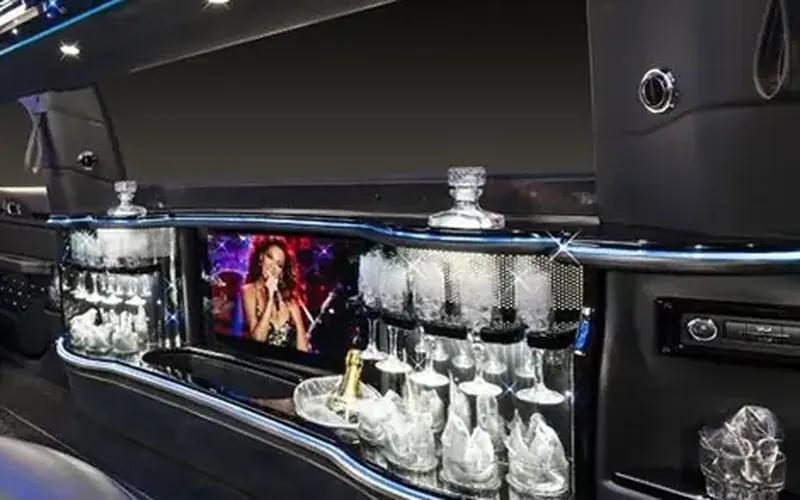
The wedding party feels the cold differently because they move between stops. Keep the time between the ceremony and reception short, and have the vehicles warm before anyone steps outside. A Sprinter limo van gives the party standing room and easier entry in a gown, which helps when everyone is dressed for a summer photograph in January weather.
Guest shuttles need their own timing in winter. Ask guests to board a few minutes earlier than you would in summer, and have the hotel to venue shuttle run on a schedule that does not leave people standing outside. If the shuttle drops guests at a distance from the door, ask the driver to pull as close as the property allows.
Plan for coats at every stop, including photo locations. A wrap, a shawl and a spare pair of shoes for the couple can live in the vehicle between stops. If you are using a wedding photo tour, tell us in advance that the route needs warm waiting space between shots, and we can build the stops around it.
Winter Driving Realities in DC, Virginia and Maryland
Winter driving in this region is shaped by water. The Potomac and Anacostia crossings, the bridges into Virginia and the roads around National Harbor and Annapolis all carry heavy traffic, and a light snow or ice can slow them further. Build more time into any route that crosses a bridge, especially in the late afternoon when commuters and wedding traffic overlap.
Treated roads are not the same as clear roads. Main arteries tend to be cleared first, while side streets, driveways and venue entrances can stay slick longer. Ask your venue about its driveway and parking area, and tell guests where to park rather than leaving them to find a spot on a narrow street in the dark.
Parking is its own winter problem. Garages fill quickly near downtown venues, and street parking is harder when snow has narrowed the lanes. If your venue has a lot, confirm whether it will be cleared and whether attendants will be on hand. Otherwise, point guests to a garage you have checked in advance and mention it in your communication.
We cannot promise road conditions or travel times, and neither can anyone else. What we can do is plan routes with extra margin, keep the chauffeur in touch with your planner on the day, and adjust the order of stops if a road is slower than expected. That flexibility matters more in January than in June.
Planning Winter Wedding Transportation
A winter wedding benefits from writing things down. Every quote we send is itemized before you book, covering the vehicles, hours, gratuity, tolls, parking, any décor requests and the deposit and cancellation terms. You see exactly what is included, including red carpet or Just Married signs if you want them, and nothing is booked until you accept the quote.
Once you book, your wedding gets one written run sheet shared with you or your planner. It lists the pickup times, the stops and the order they happen in, and it is the document everyone works from if the weather shifts. On the day, the chauffeur stays in touch with your planner or a named contact, so changes reach the vehicles without a chain of phone calls.
If you are planning a winter wedding, start with our wedding limo FAQs for the questions couples ask most about timing, vehicles and policies, including alcohol rules where they apply. Then request a free wedding quote with your date, venues and rough timeline, and we will put the details in writing so you can compare options and decide with confidence.