Wedding guest transportation is one of those decisions that looks optional until you picture the day itself. Do you need to provide transportation for wedding guests? Often, yes, but not always. It is worth arranging when your ceremony and reception sit far apart, when parking is scarce, when many guests are traveling in from out of town, or when the evening ends late and you want everyone home safely. When none of those apply, you can skip it without guilt.
This post walks through the decision from start to finish. You will find how to judge whether you need guest transportation, who typically pays, how to size a shuttle, how to handle hotels and room blocks, how to word the details for guests, and how to plan for older guests, accessibility and late nights in Washington DC, Northern Virginia and Maryland. It also covers the parts couples forget, from signage to the final run.
Key takeaways
- Arrange guest transportation when distance, parking, out-of-town guests or a late ending make driving awkward.
- Shuttles usually run on a loop between hotels and the venue, and the seat count drives the plan.
- Decide early who pays and say so plainly, whether that is you, your families or the guests.
- Tell guests the pickup point, times and last departure more than once, and put it on signage.
- Build the plan around older guests, accessibility needs and the final trip of the night.
When Wedding Guest Transportation Is Worth Arranging
The clearest case for guest transportation is a gap between the ceremony and the reception. If your ceremony ends at a church in one part of the region and the reception begins an hour or two later across a bridge or a county line, guests are left to fill that time on their own. A shuttle turns an awkward gap into a comfortable one, carrying everyone from the ceremony to the reception without a second round of directions.
Limited parking makes the decision for many couples. Venues in Georgetown, Capitol Hill, Dupont Circle and the Navy Yard area rarely offer generous parking, and street parking near a church in Old Town Alexandria or downtown Bethesda can be tight on a Saturday. When guests would otherwise circle blocks in formal clothes, a shuttle from a hotel or a nearby garage removes the stress and keeps arrivals on time.
Out-of-town guests tip the balance too. Washington draws family from all over, and many will fly into Reagan National, Dulles or BWI without a car. If a large share of your list is staying in a hotel and unfamiliar with the roads, bridges and tolls around DC, providing a ride between the hotel and the venue is a genuine kindness rather than an extra.
Late endings deserve their own mention. A reception that runs into the evening, particularly one with alcohol served, is easier to enjoy when guests know a ride is waiting at a set time. Transportation is not only about convenience; it is a practical way to make sure people who have been celebrating get home without improvising at the curb.
When You Can Skip It
Plenty of weddings do not need guest transportation at all. If your ceremony and reception happen in the same place, or within a short walk, guests can simply move from one room to the next. Venues with ample on-site parking, such as many estates and country clubs in Loudoun County or Fairfax County, make driving straightforward for local guests who know the area.
Small weddings and elopements rarely justify a shuttle. When the guest list is a few dozen people and most of them live nearby, a hired bus can feel like more logistics than the day requires. The same holds when your venue sits within walking distance of a cluster of hotels, as parts of Arlington and Tysons do, so guests can come and go on foot.
If you decide to skip it, say so plainly on your wedding website. A short note that parking is available on site, or that the ceremony and reception are in the same building, saves guests from wondering whether they should arrange something. Include the venue address and a line about parking or nearby transit so people can plan their own way there.
The Common Guest Transportation Options
Couples usually choose between a handful of approaches: guests drive themselves, a hotel provides a shuttle, you hire a dedicated shuttle or mini coach, or you book a larger vehicle such as a party bus for the wedding party and close friends. Each has trade-offs in cost, capacity and how much control you keep over timing.
The table below compares the main options at a glance. The right choice depends on your guest count, how far apart your venues sit and how much of the day you want to manage yourself.
Who Pays for Wedding Guest Transportation
There is no single rule, but a few patterns are common. Many couples build guest transportation into the wedding budget as a hosting cost, the same way they treat dinner and drinks. When a shuttle carries guests between a hotel and the venue, the couple or their families usually cover it, since it functions as part of the hospitality of the day.
Some couples split the cost with family members who want to contribute, particularly when the transportation is mainly for one side's out-of-town relatives. Others ask guests to pay a small share for an optional shuttle, though this works best when the ride is clearly a convenience rather than the only way to reach the venue.
Hotel-provided shuttles are a different arrangement, since the hotel sets the terms and may restrict the service to its own guests. If you are relying on one, confirm the details with the hotel directly rather than assuming it will cover everyone. For a fuller discussion of expectations and etiquette, read our post on who pays for wedding guest transportation.
How Many Seats Do You Actually Need
Start with your guest count, then trim it to the people who will realistically ride. Not everyone staying in a hotel will use the shuttle; some will drive, take transit or arrange their own ride. A reasonable approach is to estimate riders from the number of out-of-town guests and the size of your room block, then add a margin for the people who decide on the day.
The hotel block is your best clue. If you have reserved a set number of rooms and most of them are booked, you can expect a good share of those guests to want the shuttle. Guests staying elsewhere, or local guests driving in, usually do not need a seat. Our guide to calculating the seats you need walks through the math in detail.
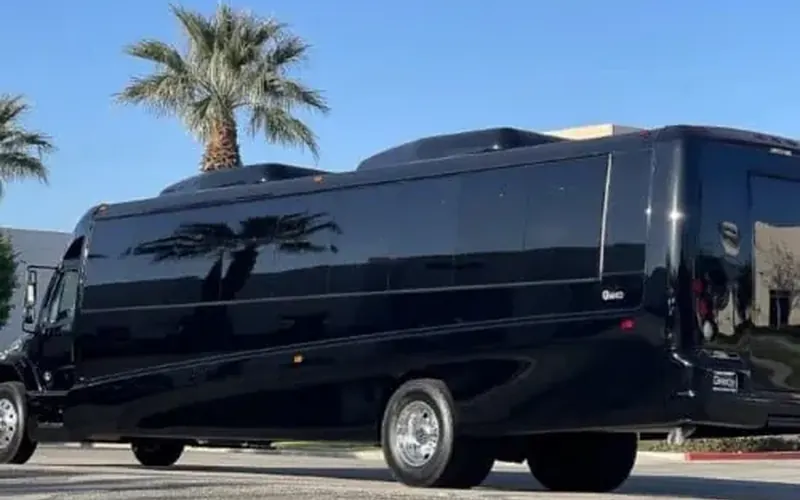
Vehicle capacity matters here. A shuttle bus or mini coach seats roughly 25 to 56 guests, while a Sprinter limo van carries about 10 to 14 and a party bus around 20 to 40. If your rider estimate falls between sizes, plan two runs rather than squeezing people in, and confirm the exact vehicle and seat count on your written quote.
Planning Hotel to Venue Shuttles
A hotel-to-venue shuttle is the workhorse of guest transportation, and it succeeds or fails on a handful of decisions made well before the wedding day. Work through these with your planner or a named contact, and put the answers in writing so the driver and the hotel both have the same plan.
- Pickup hotelChoose the hotel where most guests are staying, and confirm with the hotel where the shuttle can load and wait.
- Pickup timesSet a first run early enough that guests arrive before the ceremony, with a second run as a buffer.
- Loop lengthDecide whether the shuttle returns to the hotel between runs or waits at the venue, since this affects timing.
- Last runAgree on the final departure time and make it clear to guests so no one is left behind.
- Named contactGive the driver one person to call, usually the planner or a family member, rather than several phone numbers.
- SignageProvide a simple sign with the shuttle name and times so guests recognize the right vehicle at the curb.
- AccessibilityNote any guests who need extra time or assistance boarding, and share that with the driver in advance.
- Return tripPlan the end-of-night runs separately, since guests leave at different times and the last run matters most.
Room Blocks and Shuttle Planning
Hotel room blocks and shuttle plans are two halves of the same decision, and treating them separately usually costs you. The hotel you block determines where the shuttle picks up, how far it drives, and how many runs it can fit into an evening. Choose the block first without thinking about transportation and you may end up with a pickup point across the region from your venue. Work through both together and each one gets easier. We cover the full process in hotel room blocks and shuttle planning for DC weddings.
Start by mapping your likely guest list onto neighborhoods. If most people are flying in, a block near Reagan National or in Arlington or Old Town Alexandria keeps airport transfers short and puts the shuttle on familiar roads. If most guests live locally in Maryland or Virginia, a single block near the venue may be enough, with guests driving themselves the rest of the way. Two smaller blocks in different areas can work, but each one needs its own pickup time and route, so weigh that against the convenience.
Talk to the hotel before you sign the block. Ask where a large vehicle can legally stop and wait, whether there is a loading zone or porte-cochere, and whether the hotel restricts commercial vehicles at certain hours. Those answers shape the run sheet. When you request a quote from us, tell us the hotels you are considering and the addresses of your ceremony and reception, and we will write the pickup points and timing into the plan rather than leaving them to the week of the wedding.
A block also sets expectations. Guests who book inside the block assume the shuttle is for them, so publish the pickup hotel clearly and note whether guests staying elsewhere can drive to that hotel and park. If the hotel charges for parking, mention it so nobody is surprised. The goal is a block and a shuttle that reinforce each other: one place to stay, one place to meet the bus, one clear time to be there.
Telling Guests About the Transportation
Guests cannot use a shuttle they do not know about, and they will not read a detail buried in a long wedding website page. Put the transportation information in at least three places: the wedding website, an insert or note with the invitation or a details card, and a reminder in the days before the wedding. Each one can be short. The website carries the full schedule and pickup points; the printed piece carries the essentials; the reminder repeats the departure time and location.
Be specific rather than polite. "Shuttle available" tells a guest nothing. "Shuttle leaves the Mayflower Hotel at 3:45 p.m. for the ceremony; the last return run leaves the venue at 11:00 p.m." tells them what to do. Include the pickup address, the departure time, whether the shuttle is for all guests or only those in the block, and whether guests can leave cars at the hotel. If there are two routes or two pickup hotels, label them clearly so nobody boards the wrong vehicle.
Wording is where most couples get stuck, so we keep examples ready. Our guide to how to tell guests about wedding transportation, with wording examples, gives you sentences you can paste into a website or a details card. For the day itself, wedding shuttle schedule and signage templates covers what to print for the hotel lobby and the venue door. A simple sign with the departure time and destination prevents most confusion, and it costs you a few minutes at a printer.
Assign one person to answer transportation questions in the final weeks, usually a planner, a family member or a member of the wedding party. Give that person the run sheet and the chauffeur's contact details so questions go to someone with answers. When guests ask you directly, you can point them to the website and the contact. That keeps the last week calm and makes sure nobody arrives at the lobby to find the shuttle already gone.
Older Guests, Accessibility and VIPs
Grandparents, parents and guests with mobility needs deserve their own plan, not a spot on the general shuttle. A large shuttle bus can be hard to board for someone using a walker or recovering from surgery, and the walk from a drop-off point to a church door can be longer than it looks on a map. A sedan or SUV for a small group of VIPs lets them arrive close to the entrance, on their own schedule, without waiting for a full bus to load.
Ask early. A short conversation with parents and grandparents about what would make the day easier will tell you more than guessing. Some guests will happily ride the shuttle; others will quietly struggle and say nothing. Offer a dedicated car to the people most likely to need it, and let them decline. If a guest uses a wheelchair or has other specific needs, ask what vehicle works for them and confirm it before you book rather than assuming any car will do.
Build extra time into the plan for anyone who needs it. Easier entry matters, and so does a few minutes of buffer at each end so nobody is rushed. Our post on transportation for elderly and disabled wedding guests walks through vehicle choice, drop-off points and the questions to ask. The same thinking applies to the wedding party's older relatives and to any guest traveling alone who would rather not navigate an unfamiliar city at night.
VIPs also include the people you need on time: readers, musicians, the officiant and anyone with a role in the ceremony. A dedicated car for the people who must be early is often worth more than a larger vehicle for people who can wait. When you request a quote, list who needs a car of their own and why, and we will match the vehicle to the group and put it on the run sheet.
Getting Guests Home at the End of the Night
The end of the night is where guest transportation most often fails. Couples plan the arrival carefully and leave the departure to chance, then find a crowd in the parking lot at midnight with no ride. Decide the last departure time in advance and write it on the schedule, the website and the sign at the venue door. If the reception ends at 11:00, the final shuttle should leave after the last dance and the send-off, not before, and everyone should know it is the last one.
A single final run rarely fits a full guest list. Plan the last hour in waves: one bus after the dancing winds down, another after the send-off, with the last run clearly announced. Have someone walk the room a few minutes before each departure, and ask the DJ or band to make an announcement. Guests who are enjoying themselves will miss a sign, but they will hear a microphone. The goal is that nobody is left standing outside a locked venue wondering how to get back.
Late-night logistics in DC, Northern Virginia and Maryland bring their own wrinkles. Venues in the District often have tight residential streets and limited curbside space, and hotels may have quiet hours that affect where a bus can idle. A plan that accounts for drop-off order, the last pickup and a way to reach the chauffeur keeps the evening from ending in a scramble. Our guide to getting guests home safely with late-night wedding shuttles covers the final run in detail.
Think about the guests who leave early, too. Some will slip out after cake, and they should know whether a shuttle is running before the final departure or whether they are on their own. Publish the full schedule of runs, not just the last one. If your venue is remote, consider whether a later run makes sense for the wedding party and close family who stay to pack up, and put that decision on the run sheet so the vehicle is there when they need it.
What Out-of-Town Guests Need to Know About DC
Many of your guests will be visiting Washington DC for the first time, and a little orientation goes a long way. The region is larger than it looks on a map: a wedding in Loudoun County wine country is a long drive from a hotel in downtown DC, and a venue in Annapolis is not a quick hop from Arlington. Distances, bridges and traffic all matter, and guests who plan as if everything is ten minutes apart will be late.
Give guests a short, practical note. Tell them which airport makes sense for their route, roughly how long the drive to the hotel takes, and whether they will need a car during their stay. Mention that the Potomac bridges between DC and Virginia can be slow at rush hour, and that a Friday afternoon arrival is not the time to cut it close. A few sentences on the website, plus a link to a guide, saves you a dozen text messages in the final week.
Our out-of-town wedding guests' guide to getting around DC covers airports, neighborhoods, transit and the practical side of moving around the region. Point guests to it from your website, and add the specific pieces that apply to your wedding: the hotel address, the shuttle times and the venue. General orientation plus your own details is the combination that actually helps someone who has never been here before.
If you are planning a welcome event, a rehearsal dinner or a Sunday brunch, think about how guests will reach those too. A shuttle for the main day does not solve a Friday night dinner across town. You do not have to arrange everything, but telling guests what is walkable, what needs a car and what the shuttle covers keeps the weekend running smoothly for people who do not know the area.
Planning the Transportation and Getting a Written Quote
By now you should have a rough plan: whether you need guest transportation, which hotels feed the shuttle, how many seats and runs you need, who pays, and how guests will hear about it. The next step is turning that into a written run sheet that everyone can follow. A run sheet lists each vehicle, its pickup and drop-off points, its times and the name of the person the chauffeur contacts on the day. One document, shared with you or your planner, removes most of the guesswork.
Our wedding guest shuttle service handles hotel-to-venue runs, reception shuttles and the final trip home, with vehicles sized to your list. If you are still deciding between a party bus for the wedding party and a shuttle bus for guests, the wedding fleet shows the typical seat ranges for each. Red carpet, signs and other touches are arranged when you book them and written on the quote, so there are no surprises about what is included.
Every quote we write is itemized before anything is booked: vehicles, hours, gratuity, tolls, parking, décor requests, deposit and cancellation terms. Nothing is reserved until you accept it in writing. That gives you a document to compare, share with family who are helping pay, and check against your run sheet. If your plans change, the quote changes with them, and you see the difference before you commit.
When you are ready, request a free wedding quote with your date, your ceremony and reception addresses, the hotels you are considering and your estimated guest count. We will come back with a written plan and an itemized quote, and we will work through the details with you or your planner. If you are still early in planning, start with the shuttle page and the fleet, then come back to the quote when the venue and date are set.