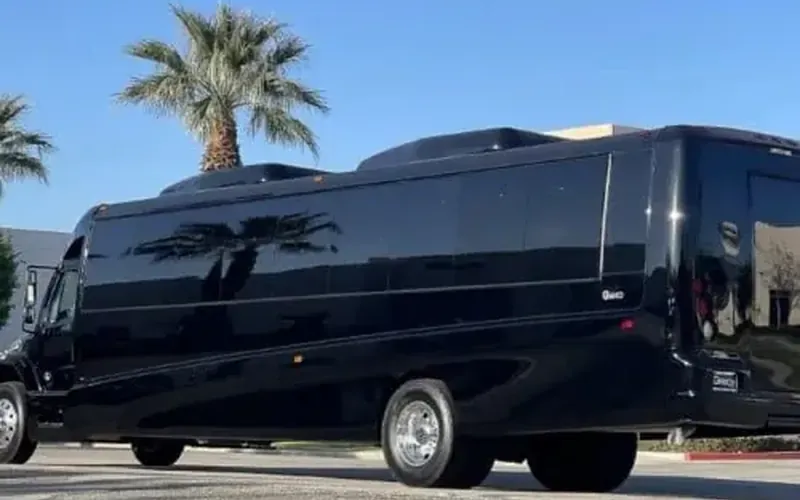
Planning wedding guest shuttles from hotels to your venue comes down to four decisions: who rides, where they board, when each run leaves, and how they get back. Get those settled early and the rest of the plan falls into place. Most couples start this about three to four months out, once the room block and guest list have firmed up.
This post walks through the whole process for a Washington DC, Northern Virginia or Maryland wedding. You will find how to pick the hotel pickup points, size the vehicles, build a run sheet that survives DC traffic, and tell guests clearly where to be and when. It also covers the return trip, accessibility, and the questions worth settling in writing before you book.
Key takeaways
- Start shuttle planning once your room block and RSVPs give you a realistic headcount.
- One hotel pickup point is simpler than several; two is the practical maximum for most weddings.
- Build the schedule around arrival time at the venue, then work backward through traffic.
- A printed schedule and clear signage at the hotel prevent most shuttle confusion.
- Confirm the return runs and the last departure time in writing before the wedding day.
Decide Who the Shuttle Is Actually For
Start by sorting your guest list into three groups: out-of-town guests staying in hotels, older family members who may not want to drive at night, and the wedding party. Each group has different timing needs. Out-of-town guests usually need a ride from the hotel to the ceremony and back, while the wedding party often needs to arrive early for photos and stay through the reception. Treating them as one group leads to a shuttle that serves no one well.
For out-of-town guests, the shuttle is often the difference between a relaxed weekend and a stressful one. Many will be unfamiliar with DC roads, bridge crossings and parking. A single pickup at the hotel where most of them are staying removes that friction. If your room block is spread across two hotels, consider whether one pickup point can serve both, or whether a second stop is worth the extra time on the route.
Older family members and VIP guests may need door-to-door attention rather than a group shuttle. A luxury sedan or SUV can collect them from home or hotel and deliver them closer to the venue entrance. The wedding party usually travels together earlier in the day, often with the couple, and may not need the guest shuttle at all. Clarify these roles early so you do not pay for seats no one uses.
Choosing Hotel Pickup Points in DC, Virginia and Maryland
Fewer pickup points almost always make a better shuttle. Each additional hotel stop adds loading time, traffic risk and confusion for guests who are not sure which bus is theirs. One well-chosen hotel pickup is easier to communicate and easier to run on schedule. If you must use two, pick hotels that are close together or on the same side of the river so the route does not double back.
Where your hotels sit relative to bridges and major roads shapes the route more than distance alone. A hotel in Arlington or Old Town Alexandria may be a short drive from a DC venue, but the bridge crossing can add unpredictable time. Similarly, a Bethesda or Chevy Chase hotel feeding into a Virginia venue means a Beltway or Chain Bridge run. Build your pickup times around the crossing, not just the mileage.
Think about the venue's own access too. Some DC venues sit on one-way streets or have limited pull-off space for a larger vehicle. Churches may have a narrow driveway or a busy Sunday morning. A quick conversation with the venue about where a shuttle can stop and wait saves a last-minute scramble. Confirm loading zones and any permit needs with the venue and the local authority before you finalize the plan.
How Many Seats and Vehicles You Need
Sizing the shuttle starts with a realistic count of who will actually ride. Not every guest in the room block will use it, and some will drive or take their own transportation. A common approach is to plan for roughly the number of out-of-town guests who have confirmed, then add a small buffer. Your planner or hotel contact can help you estimate based on RSVPs and room block pickup.
Match that count to vehicle capacity, then decide whether one large vehicle or two smaller ones make more sense. A single shuttle bus keeps the group together; two smaller vehicles can run staggered departures. The table below shows typical seat ranges. The exact vehicle is confirmed on your written quote, so treat these as planning guides rather than promises.
| Typical guest count | Suggested vehicle type | Seat range |
|---|---|---|
| Up to 14 | Sprinter limo van | 10–14 |
| 15–25 | Shuttle bus | 25–56 |
| 26–40 | Wedding party bus or mini coach | 20–40 |
| 41–56 | Mini coach | 25–56 |
| Two hotels, 30–50 total | Two shuttle buses or one bus plus a van | Varies |
| Wedding party only | SUV stretch limo or party bus | 14–40 |
| VIP and older guests | Luxury sedan or SUV | 3–6 |
Building the Shuttle Schedule Around Your Ceremony Time
Work backward from your ceremony start. The goal is for guests to arrive calm and seated, not stepping off a bus as the processional begins. A sample afternoon and evening run might look like this.
- First pickupThe first shuttle leaves the hotel with enough time for traffic and a comfortable arrival buffer before the ceremony.
- Arrival bufferGuests arrive at the venue with time to find seats, sign the guest book and settle before the processional.
- CeremonyThe shuttle waits or returns to the hotel for a second load, depending on your plan and venue parking.
- Reception runsIf there is a gap between ceremony and reception, a shuttle can move guests to the reception venue or back to the hotel.
- Last trip backThe final shuttle departs the reception at a set time, announced in advance, so guests know the plan.
- Late-night optionIf the party runs late, consider a second return trip or a smaller vehicle for the last few guests.
Planning Wedding Guest Shuttles From Hotels: A Step-by-Step Checklist
Once you know who is riding and from where, the rest is about writing it down clearly and sharing it. The checklist below covers the practical pieces that keep a shuttle running smoothly on the day.
If you are still deciding whether a shuttle is necessary at all, read our guide on whether you need to provide transportation for wedding guests before you commit. It helps you weigh the cost against the guest experience.
- Confirm the guest countUse RSVPs and room block pickup to estimate riders, then add a small buffer.
- Choose pickup pointsOne hotel is easiest; two only if they are close together or on the same side of the river.
- Set the scheduleWork backward from the ceremony time and build in an arrival buffer.
- Assign a contactName one person, usually a planner or family member, who will be at the hotel to help guests board.
- Share the run sheetGive the schedule and pickup details to the hotel front desk and your planner so guests can ask questions.
- Plan the returnSet a clear last-trip time and announce it at the reception so no one is left behind.
- Check accessConfirm loading zones, parking and any permit needs with the venue and local authority.
What to Put on the Quote Before You Book
A written, itemized quote is the best way to avoid surprises. Ask for the vehicle type, the number of hours, the pickup and drop-off locations, and any fees for tolls, parking or decor. If you want red carpet service, "Just Married" signs or other touches, ask for them to be written on the quote so you know exactly what is included.
Alcohol policies vary by vehicle and by DC, Virginia and Maryland law. If you plan to serve drinks on board, confirm the policy in writing and make sure it only applies to guests 21 and older. The quote should state the policy clearly so there is no confusion on the day.
Every wedding we handle gets one written run sheet shared with the couple or their planner. On the day, the chauffeur stays in touch with the planner or a named contact so timing changes are handled quickly.
Communicating the Plan to Guests
Guests need to know where to be, when, and what to do if they miss the shuttle. Put the pickup time and location on your wedding website, in the welcome bag and on a small card at the hotel front desk. A simple map or landmark reference helps guests who are not familiar with the area.
For wording examples you can adapt, see our guide on how to tell guests about wedding transportation. It covers everything from website copy to signage at the hotel.
If your guest list includes older or disabled guests, plan for extra time and assistance. Our post on transportation for elderly and disabled wedding guests covers vehicle choices and boarding help.
When to Book and What to Confirm
Book your shuttle once you have a firm guest count and a confirmed ceremony time. That is usually a few months out, but popular weekends in spring and fall fill up earlier. If your date falls during a busy season, start the conversation sooner rather than later.
Before you sign, confirm the cancellation terms, the deposit amount and what happens if your guest count changes. Ask whether the quote includes gratuity and any wait time. A written quote that lists every line item is easier to compare and easier to adjust if your plans shift.
When you are ready to see what a shuttle plan looks like for your date and guest count, request a free wedding quote. We will put the vehicle, hours and terms in writing so you can decide with the full picture in front of you.
Writing a Run Sheet Your Planner Can Use
A run sheet is the single page that tells everyone who is where and when. Ours is written for each wedding and shared with the couple or their planner before the day, and the chauffeur stays in touch with a named contact as the runs unfold. Yours should be just as plain, with no detail left to memory.
- Pickup timesList a boarding time and a departure time for every run, not just the ceremony start, so guests know when the bus actually leaves.
- Contact namesName one person at the hotel and one at the venue, with cell numbers, so the chauffeur has someone to call.
- Curbside instructionsDescribe exactly where the vehicle loads, such as the hotel's main entrance or a side porte-cochere, and what guests will see there.
- Who rides on each runAssign guests, family or the wedding party to specific runs so you know who is expected and can spot a gap early.
- Vehicle and capacityNote the vehicle type and seat count for each run so nobody assumes a second bus is coming.
- Return planWrite the outbound and return times together, including the last run of the night and who is responsible for the final headcount.
- Accessibility notesFlag guests who need extra time, a step-free entrance or help with a wheelchair, so the chauffeur is ready at that stop.
Telling Guests Where to Be: Signage and Wording
Guests miss shuttles for one reason: they did not know where to stand or when to be there. A sign in the hotel lobby reaches people in the moment they are deciding what to do. Make it large, put it near the front desk or the main door, and state the boarding time and the departure time separately.
Pair the sign with a short line on the welcome card or itinerary in each guest's room. Something like "Shuttle to the ceremony boards in the lobby at 3:15 and leaves at 3:30" gives people an anchor. Include the venue name and the return time on the same card so nobody has to search for it later.
Name one person guests can ask, and put their number on the card and the sign. Tell hotel staff at the front desk what is happening as well, since guests often ask them first. If you want help drafting the exact wording, we have examples in our post on how to tell guests about wedding transportation.
The Return Trip and Getting Guests Home
The return trip is where shuttle plans usually come apart, because guests leave on their own schedule rather than yours. Build in staggered departures instead of a single run, especially if your reception runs late or the venue sits far from the hotels. A departure board near the exit, listing the times the vehicle leaves, gives guests a clear picture without anyone chasing them down.
Plan the last run deliberately. Decide the final departure time in advance, write it on the run sheet and announce it once during the reception so nobody is caught out. The chauffeur and your named contact should confirm the last headcount together before the vehicle pulls away. Our post on getting guests home safely with late-night wedding shuttles goes deeper on that final run.
Some guests will want to leave early, and that is fine. A first return run shortly after dinner covers grandparents, parents with young children and anyone with a long drive ahead. If your venue sits in DC or Old Town Alexandria, where streets are narrow and parking is tight, a scheduled run beats a scramble at the curb.
Plan Your Guest Shuttle and Get a Written Quote
Before you ask for pricing, gather the facts that shape it: the hotel addresses, the venue address, your ceremony and reception times, and a rough guest count split between the hotel and local guests. Add any accessibility needs and whether you want a first early return run. With those in hand, the conversation moves quickly.
Our hotel to venue shuttle service is built for exactly this kind of plan, and you can see the vehicle options on our shuttle bus and mini coach page. Every quote we send is written and itemized before booking, covering vehicles, hours, gratuity, tolls, parking, any décor requests, and the deposit and cancellation terms. Nothing is booked until you accept it.
If your hotels and venue are spread across the region, our service areas page shows the ground we cover, from DC neighborhoods to Loudoun County and Annapolis. When you are ready, request a free wedding quote and bring your run sheet draft with you.