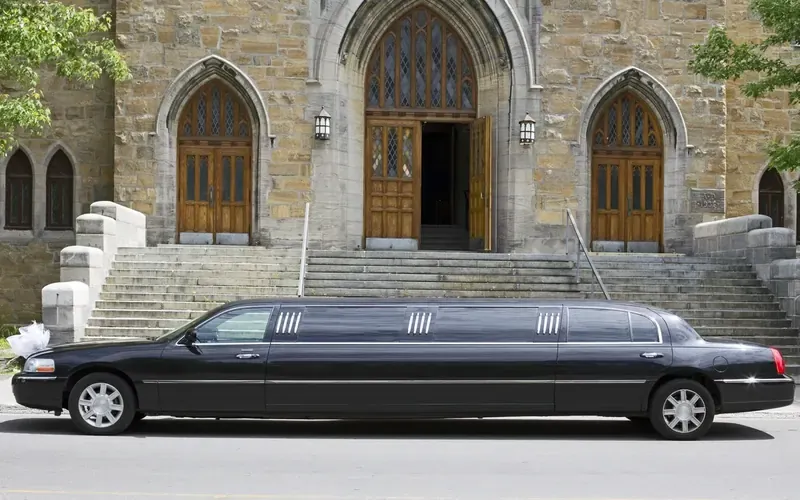
The most beautiful churches for weddings in Washington DC tend to be the ones that have stood here for a century or more: stone facades, tall windows, and sanctuaries that hold a full guest list without feeling crowded. If you are choosing a church for your ceremony, the building is only half the decision. The other half is how your families, wedding party and out-of-town guests move between the church, photos and the reception.
This post walks through a set of well-known DC churches worth considering, grouped by neighborhood, along with the practical details couples ask about most: booking the space, guest parking, photo rules and the gap between a morning or afternoon ceremony and an evening reception. We also cover how church wedding transportation usually works in the District, from the bridal party arriving together to shuttles that carry guests from a hotel to the pews and on to the party. For a wider look at ceremony and reception spaces across the region, see our guide to the best wedding venues in Washington DC and how to get there.
Key takeaways
- DC's historic churches sit in distinct neighborhoods, and each one brings its own parking and traffic pattern.
- Most churches have their own rules on booking, photography, music and decorating, so confirm details with the parish office early.
- A gap between ceremony and reception is normal in DC; plan where the wedding party and guests will go in between.
- Guest shuttles and a single vehicle for the bridal party solve most church-day logistics.
- Get the church's arrival and departure rules in writing before you finalize any vehicle timing.
What Makes a DC Church Wedding Distinctive
Washington is a city of congregations, and many of its churches were built when the federal city was still finding its shape. That means a DC church wedding often comes with stonework, stained glass and organs that date back well over a century. The architecture does much of the decorating for you, which is why so many couples keep flowers simple inside the sanctuary.
The same history creates practical constraints. City churches sit on tight blocks with limited curbside space, one-way streets and weekday traffic that does not pause for a Saturday ceremony. Drop-off often happens on a narrow side street rather than at a grand front entrance. Planning the arrival is as much a part of the day as the vows.
A church ceremony also sets the rhythm for everything after it. The service has a fixed start, the receiving line and photos take a predictable stretch of time, and the reception begins at a set hour across town. Building the rest of the day around that fixed point keeps the schedule honest and calm.
Churches for Weddings in Washington DC by Neighborhood
Most of the churches couples ask about cluster in a handful of historic neighborhoods, each with its own streets, parking realities and photo options nearby. The list below covers well-known churches worth a look, grouped by area. Confirm availability and wedding policies directly with each parish office.
Capitol Hill
Capitol Hill holds some of the city's oldest church buildings, including St. Mark's Episcopal Church on Third Street SE and Capitol Hill Presbyterian Church, both long established near the Capitol. Streets here are narrow and residential, so curbside space for a limousine or shuttle is limited. Many couples pair a Hill ceremony with photos at the Capitol grounds or Eastern Market.
Dupont Circle and Foggy Bottom
St. Matthew's Cathedral on Rhode Island Avenue NW is one of the city's most recognizable churches, with its dome and long nave. Nearby, St. Stephen and the Incarnation Episcopal Church and the historic Foundry United Methodist Church serve central neighborhoods. Dupont's circles and embassy rows give photographers plenty of backdrops within a few blocks.
Georgetown
Georgetown's churches sit among Federal-style houses and cobblestone side streets. Christ Church Georgetown on O Street and St. John's Episcopal Church on Potomac Avenue are both long-standing congregations in the heart of the neighborhood. Parking is scarce, and Wisconsin Avenue traffic builds quickly, so arrivals need extra time.
Downtown and Penn Quarter
New York Avenue Presbyterian Church, near the National Portrait Gallery, and Mount Vernon Place United Methodist Church sit in the middle of the business district. These locations put you minutes from hotel blocks and reception venues, which helps when guests are staying downtown. Weekday traffic and event-day street closures are the main variables to plan around.
Northwest Along 16th Street
The stretch of 16th Street NW north of the White House is lined with houses of worship, including Foundry United Methodist Church and several historic Baptist and Presbyterian congregations. Wide avenues make drop-off easier than on side streets, though the corridor carries steady traffic. Many couples use the tree-lined blocks for portraits after the service.
Across the River
Old Town Alexandria and Arlington hold well-known churches of their own, including Christ Church in Alexandria, where George Washington once worshipped. A Virginia ceremony keeps you close to National Airport and Northern Virginia reception venues. If your guest list splits between DC hotels and Virginia, plan the shuttle route early.
Comparing Four Well-Known DC Churches
The table below puts four frequently considered churches side by side on the details that shape a wedding day: where they sit, what the setting feels like, and what couples usually need to plan around. It is a starting point for your own visits, not a substitute for a conversation with each parish.
Availability, wedding policies and fees are set by each church and change over time. Treat what you read here as general context and confirm everything with the parish office before you build a schedule around it.
| Church | Neighborhood | Setting | What to plan around |
|---|---|---|---|
| St. Matthew's Cathedral | Dupont Circle / downtown | Grand cathedral with a dome and long nave | Large guest lists, formal processions, busy Rhode Island Avenue traffic |
| St. Mark's Episcopal Church | Capitol Hill | Historic Hill church near the Capitol | Narrow residential streets, limited curbside space, Hill photo options |
| Christ Church Georgetown | Georgetown | Federal-era neighborhood church | Scarce parking, Wisconsin Avenue congestion, tight side streets |
| New York Avenue Presbyterian Church | Downtown / Penn Quarter | Historic church in the business district | Weekday traffic, event-day street closures, close hotel blocks |
| Foundry United Methodist Church | 16th Street NW | Long-standing congregation on a wide avenue | Steady avenue traffic, easier drop-off than side streets |
Booking a Church and What to Confirm First
Every parish runs its own wedding process, and the details matter more than the brochure. Before you set a date, ask the questions below in writing and keep the answers with your planning documents. A short conversation with the parish office now saves confusion later.
- Availability and calendarAsk which dates and times the church holds for weddings and how far ahead you can reserve, since some parishes book well over a year out.
- Member requirementsSome congregations reserve weddings for members or require a relationship with the parish; ask plainly what applies to you.
- Pre-marriage requirementsConfirm any preparation classes, meetings with clergy or paperwork the church requires, and how far in advance they must be completed.
- Photo and video rulesAsk where photographers may stand, whether flash and drones are allowed, and whether the church permits photos during the service.
- Music and décor limitsConfirm which musicians are permitted, whether outside vendors can play, and what flowers or decorations are allowed in the sanctuary.
- Arrival windowsAsk how early the wedding party may arrive, when the church opens, and how long the space stays available after the service for photos and the receiving line.
- Guest capacity and seatingConfirm the comfortable seated capacity rather than the maximum, and ask how ushers should handle late arrivals.
- Access and logisticsAsk about accessible entrances, where vehicles may wait, and whether the church has a preferred drop-off point on the block.
Parking, Drop-Off and Guest Arrivals
Parking surprises couples most. Many DC churches sit on a single block with metered street parking, residential permit zones and no lot of their own, and Sunday morning services nearby add competition for spaces. Ask the church office what they can arrange, whether a neighboring garage or school lot opens to wedding guests, and put what you learn on your wedding website and invitation insert.
Drop-off deserves its own plan. Some churches have a circle drive or covered portico where a car can pause; others open onto a narrow street where a vehicle cannot sit without blocking traffic. Walk the route with your planner or a family member beforehand and choose the exact spot where the bride steps out, ideally out of sight of early guests.
Staggered arrivals work best. Family and older guests often prefer to come early and settle in, while friends may arrive closer to the start. A wedding guest shuttle making two or three trips from a hotel handles this naturally and keeps the street in front of the church clear. Confirm any limits on large vehicles with the church office before you book.
From Ceremony to Reception: Planning the Gap
Most DC church ceremonies run 45 minutes to an hour, and the reception rarely starts right afterward. This is the sequence we build run sheets around most often.
- Wedding party arrivalThe bridal party travels together and arrives 30 to 45 minutes before the start, with the bride kept out of view while guests are seated.
- Parents and grandparentsA separate sedan or SUV brings parents and older family members early, so they are in place before the processional.
- Guest shuttlesShuttles run from the hotel to the church in waves, dropping guests at the door and returning for the next group.
- The ceremonyChauffeurs wait nearby rather than parking far away, since the exit is often the tightest moment of the day.
- PhotosImmediate family and the wedding party stay for portraits at the church or move to a nearby park or landmark while guests are in transit.
- The run to the receptionThe couple leaves last in their own car, with the party and guests already on their way, so everyone arrives within a short window.
How Church Wedding Transportation Works
Church days usually need three kinds of vehicles, not one. The bridal party travels together in a stretch limousine, SUV stretch limo or Sprinter van, depending on group size and how easily everyone can step in and out in a gown or suit. Parents and grandparents often prefer a luxury sedan or SUV that picks them up at home or the hotel and drops them at the church door.
Guest shuttles are the third piece. If your hotel and church are more than a short walk apart, a shuttle bus or mini coach moves guests in groups, then returns them to the hotel or continues to the reception. This keeps the church block clear and means out-of-town guests without cars are never stranded. We set out the full range on our church wedding transportation page.
Timing is where these pieces meet. A written run sheet lists each pickup, the name and phone number of the person riding, and the contact the chauffeur calls if anything shifts. On the day, your chauffeur stays in touch with your planner or a named family member rather than trying to reach the couple during the ceremony. The same approach applies to a hotel to venue shuttle.
Planning the Transportation Around Your Church Ceremony
Start with the church office. Ask about drop-off rules, limits on vehicle size, photo policies inside and on the steps, and whether the church has a preferred arrival window. Confirm these details in writing and share them with whoever handles transportation, since a rule discovered on the wedding morning is hard to solve.
Then build a run sheet that covers the whole day, not just the church. List the bridal party pickup, the parents' car, each shuttle trip, the photo stop and the departure for the reception, with times and addresses. We write one run sheet per wedding and share it with you or your planner, and the chauffeur works from that document on the day.
Finally, get everything in writing before you book. Every quote we send is itemized, covering vehicles, hours, gratuity, tolls, parking, any décor requests and the deposit and cancellation terms, and nothing is reserved until you accept it. Red carpet, signs and similar touches are arranged when booked and appear on the quote. When you are ready, request a free wedding quote and we will build the plan around your ceremony time and guest count.