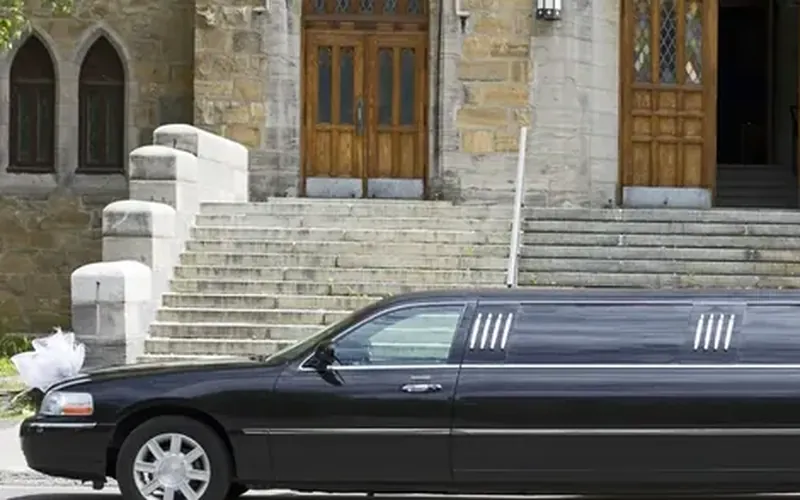
Northern Virginia winery weddings put you among vineyards, barns and Blue Ridge views, but they also put you far from hotels, parking and the city. The venue sets the mood; the drive decides whether the day feels calm or rushed. This guide covers how winery venues work and how to plan transportation that fits the schedule.
We start with the practical shape of a Virginia wine country wedding: the kinds of venues you will see, the roads that lead there, and the timing that catches couples out. Then we get specific about vehicles, guest shuttles, photos and the questions to settle before you book. If you want the wider picture of DC-area venues, start with our guide to the best wedding venues in Washington DC and how to get there.
Key takeaways
- Virginia wine country venues sit 45 to 75 minutes from most of DC and close early in the evening.
- Most winery weddings need a guest shuttle, because rural parking and winding roads are hard on guests.
- Build the drive into your photo plan rather than treating it as dead time.
- Ask each venue for its vendor curfew, parking rules and the exact drop-off point before you book transport.
- One written run sheet shared with the venue and planner keeps the day moving.
Why couples choose Northern Virginia winery weddings
The first draw is the setting itself: rows of vines, open lawns, and long views toward the Blue Ridge. A vineyard gives you a backdrop that needs little decoration, and it gives your guests somewhere to wander between the ceremony and dinner. For couples who want an outdoor day without building a tent from scratch, that combination is hard to match inside the Beltway.
Winery venues also tend to feel less formal than a ballroom. Many couples treat the day as a relaxed gathering with lawn games, local wine, and a long dinner, rather than a tightly choreographed production. That mood shapes transportation too: guests arrive over a wider window, and the schedule leaves more room for photos among the vines.
Finally, a Virginia wine country wedding often turns into a weekend for the people who travel. Guests book rooms nearby, arrive the day before, and make the rehearsal dinner part of the trip. That weekend shape is a pleasure, but it also means more moves to plan: airport pickups, hotel-to-venue shuttles, and a clear way home at the end of the night.
The kinds of winery venues you will find
Virginia wine country is not one kind of venue. Some couples marry at a working vineyard with production happening around them, others at a restored barn or estate with formal gardens, and others on a tented lawn that exists only for the event. Each type changes what your transportation has to do, from where vehicles can wait to how guests walk from a drop-off point to the ceremony.
The table below sets out the common types and what each usually means for logistics. Treat it as a starting point for questions to ask the venue, not a substitute for their site plan and rules.
| Venue type | What it usually looks like | What it means for transport |
|---|---|---|
| Working vineyard | Vines in production, a tasting room, and event space alongside daily operations | Drop-off and waiting areas may be shared with visitors; confirm where vehicles can stage |
| Barn and estate | A restored barn or historic house with lawns and gardens for the ceremony and reception | Often a single lane in and out; ask about turnaround space for larger vehicles |
| Tasting room | Indoor space with a terrace, used for smaller weddings and receptions | Parking can be tight; guest shuttles reduce the number of cars on site |
| Tented lawn | Open ground with a tent built for the event, usually with limited permanent facilities | Paths may be unpaved; confirm lighting and a firm drop-off point for evening departures |
| Hillside or ridge setting | Elevated ground with long views, reached by rural roads | Gravel or steep access may limit larger vehicles; ask which vehicle types the venue accepts |
Where Virginia wine country sits relative to DC
Most Northern Virginia winery weddings fall into a few clusters. Loudoun County, around Leesburg and Middleburg, is the closest and most concentrated, with vineyards spread along the roads that run west from the Beltway. Fauquier County, around Warrenton and The Plains, sits a little farther out and feels more rural. Both are reachable from DC, but neither is a short hop once traffic builds.
The routes matter as much as the distance. From DC you will usually head west on Interstate 66 or out through Loudoun on Route 7 or the Dulles Toll Road, then finish on two-lane roads. The last few miles are often the slowest, with narrow lanes, farm equipment, and turns that are easy to miss after dark. Build that final stretch into your timing rather than treating it as a detail.
Drive times vary with the day and the hour, so plan by route rather than by a single number. A midday run to Leesburg on a Saturday is a different trip from a Friday evening departure, and the return after a reception ends is different again. If your guests are staying in DC, Arlington, or Tysons, the shuttle ride is long enough that it becomes part of the evening, not just a transfer.
Timing a winery wedding day
A winery day works best when the transportation is built around the venue's rhythm rather than the other way round. The sample below shows how the pieces usually fit, from getting-ready through the last shuttle.
- Getting readyThe couple and wedding party are collected from a hotel or home and brought to the venue, with the dress and rings traveling in the same vehicle.
- CeremonyGuests arrive by shuttle or car and are dropped at the ceremony point; the couple arrives separately and waits out of sight until the walk down the aisle.
- PhotosThe couple and photographer move among the vines and grounds while guests head to the reception space, often with a stop at a second photo location.
- ReceptionThe planner or a named contact stays in touch with the chauffeur, who is ready for any mid-evening move between buildings or lawns.
- Last shuttleGuest shuttles run on a loop back to the hotels, with the final departure set early enough that no one is left waiting on a dark rural road.
Guest shuttles are usually the biggest decision
Winery venues in Northern Virginia tend to sit at the end of two-lane roads, far from the hotels where your guests are staying. Guests who drive themselves face narrow entrances, gravel or grass parking, and a long ride home after a full day of celebrating. A shuttle removes all three problems at once.
Hotel pickups are the usual pattern. You choose one or two hotels where most out-of-town guests are staying, and the shuttle runs a loop between the hotel and the venue. A single large pickup point keeps the schedule simple and makes it easier for guests to find the bus. If your guests are spread across several hotels, a second stop or a second vehicle is usually better than stretching one route.
Sizing the fleet comes down to guest count and how many trips you want each vehicle to make. A coach that carries a large group can do two or three runs before the ceremony, while a smaller van suits a short list of close family. Plan the last return trip around the venue's closing time, not around when the dancing ends. Our wedding guest shuttle and hotel to venue shuttle pages cover how those loops are built.
Choosing vehicles for a vineyard wedding
A winery wedding usually needs more than one kind of vehicle. Parents and grandparents want a quiet, easy ride; the wedding party wants room to travel together; guests need a shuttle. The sizes below are typical seat ranges, and the exact vehicle is confirmed on your written quote.
Luxury Sedan & SUV for parents and VIP guests
A sedan or SUV carries up to 3–6 guests and suits parents, grandparents and anyone who should not be climbing into a tall vehicle. It is also a calm choice for the ride out to the vineyard before the ceremony. If a few family members are staying at a different hotel, this is an easy way to bring them in without adding a stop to the guest shuttle.
Stretch Limousine for the couple or a small party
A stretch limousine seats up to 8–10 guests and works well for the couple alone or a small bridal party. On rural roads it keeps the group together and gives you a quiet space before the ceremony. If your party is larger, move up a size rather than squeezing people in.
SUV Stretch Limo for the whole wedding party
The SUV stretch limo holds up to 14–20 guests, enough for the whole wedding party in one car. That matters at a winery, where you want everyone arriving together and no one waiting on a second vehicle. It also gives you a single pickup point for photos on the way.
Sprinter Limo Van for gowns and easy entry
A Sprinter limo van seats up to 10–14 guests with standing room and a step-in height that is easier in a long gown. If the bride or anyone in the party is worried about getting in and out of a low car, this is often the practical answer. It also handles the gravel and uneven ground at some vineyard entrances better than a long stretch.
Wedding Party Bus for big parties and the reception run
A party bus carries up to 20–40 guests and suits a large wedding party, a photo tour with the whole group, or the run from the ceremony to the reception. At a winery it can double as the vehicle that keeps the party together between the ceremony site and the reception space.
Shuttle Bus & Mini Coach for guest loops
A shuttle bus or mini coach carries up to 25–56 guests and is the usual choice for hotel-to-venue loops. Larger capacity means fewer trips and a simpler schedule. If your guest list is big and the venue is far out, this is the vehicle that makes the day work.
Photos, curfews and the questions to ask the venue
Wineries are working properties with neighbors, staff and rules that do not always show up in the contract summary. Ask these questions early, before you finalize transportation, so the schedule you build matches what the venue will actually allow.
- What time does the venue's music and event curfew fall, and does the last shuttle need to leave before it?
- Where exactly do vehicles drop off and pick up guests, and is the route paved, gravel or grass?
- Is there space for a shuttle bus or coach to turn around and wait, or must vehicles leave between runs?
- How many cars can park on site, and is parking staffed or self-park?
- Are there noise or neighbor restrictions that affect arrival times or outdoor photos?
- When can vendors and transportation arrive to set up, and is there a separate vendor entrance?
- Does the venue require a certificate of insurance or advance vehicle details from transportation providers?
- What is the rain plan for photos, and where would vehicles stage if the ceremony moves indoors?
Planning the transportation for your winery wedding
Every quote we write is itemized before anything is booked. Vehicles, hours, gratuity, tolls, parking, any décor requests, the deposit and the cancellation terms all appear in writing, and nothing is reserved until you accept it. For a winery wedding, the quote also reflects the extra drive time that rural roads add, so the hours you pay for match the day you are planning.
Once you book, we build one written run sheet for the day and share it with you or your planner. It lists pickup times, addresses, which vehicle goes where, and who is riding in each one. On the day, the chauffeur stays in touch with your planner or a named contact, so a late photo stop or a ceremony that runs long does not leave anyone waiting. Our Virginia wine country wedding transportation page explains how those routes are put together.
Start with the venue's curfew and drop-off rules, then work backward to hotel pickups and the ceremony start. Decide early whether guests will shuttle or drive, and size the fleet from there. When you are ready, request a free wedding quote with your date, venue and guest count, and we will send an itemized plan you can compare against your schedule.